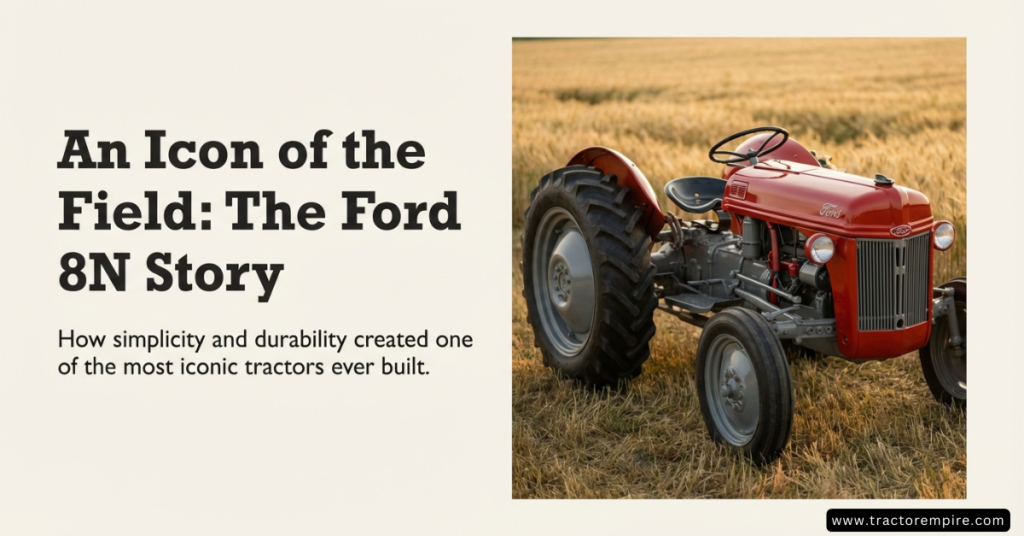
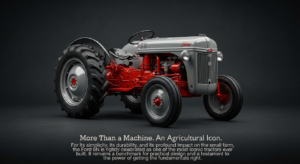
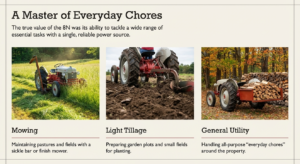
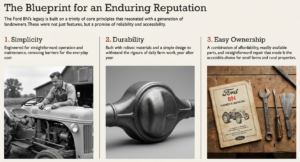
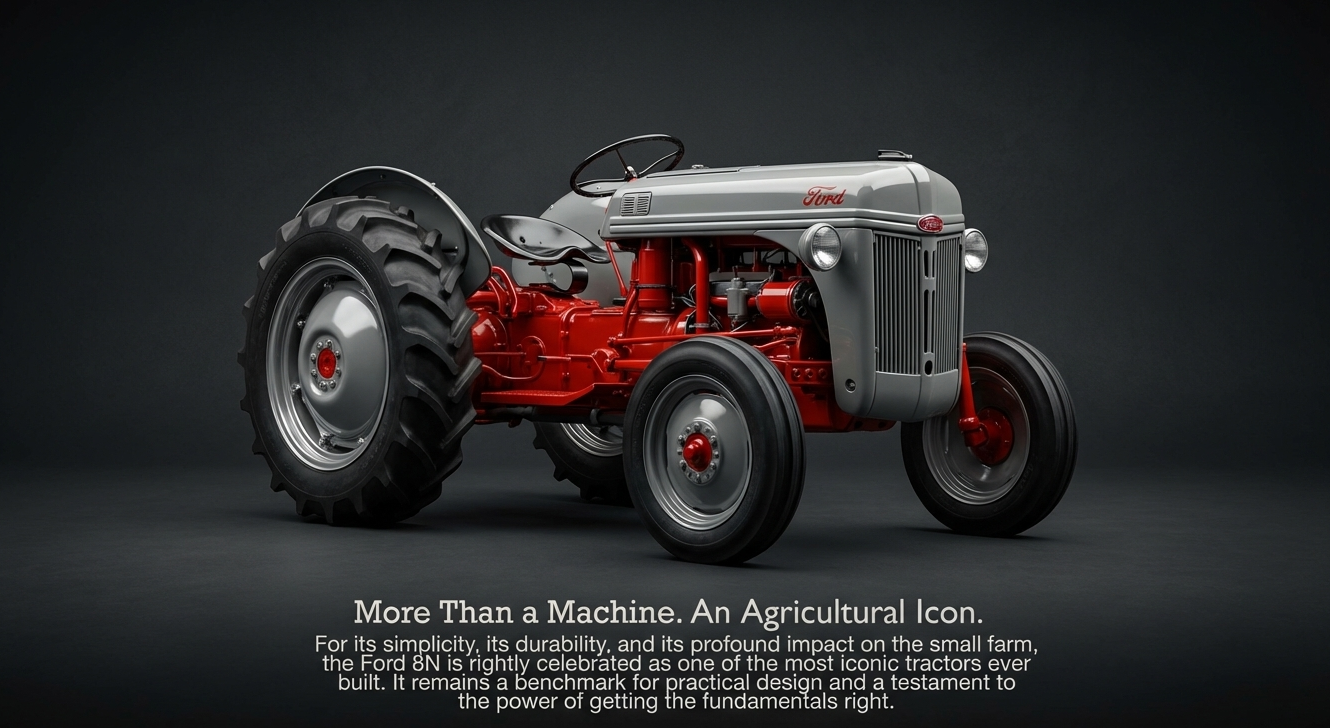
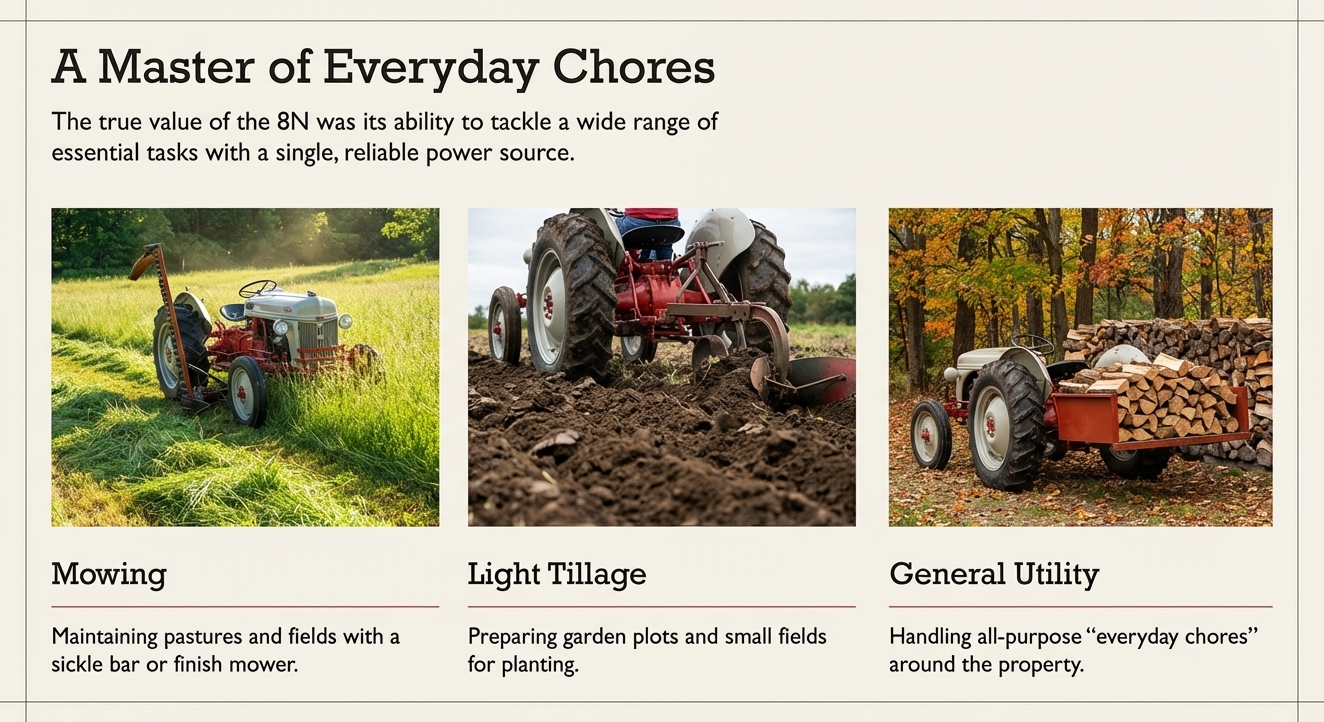
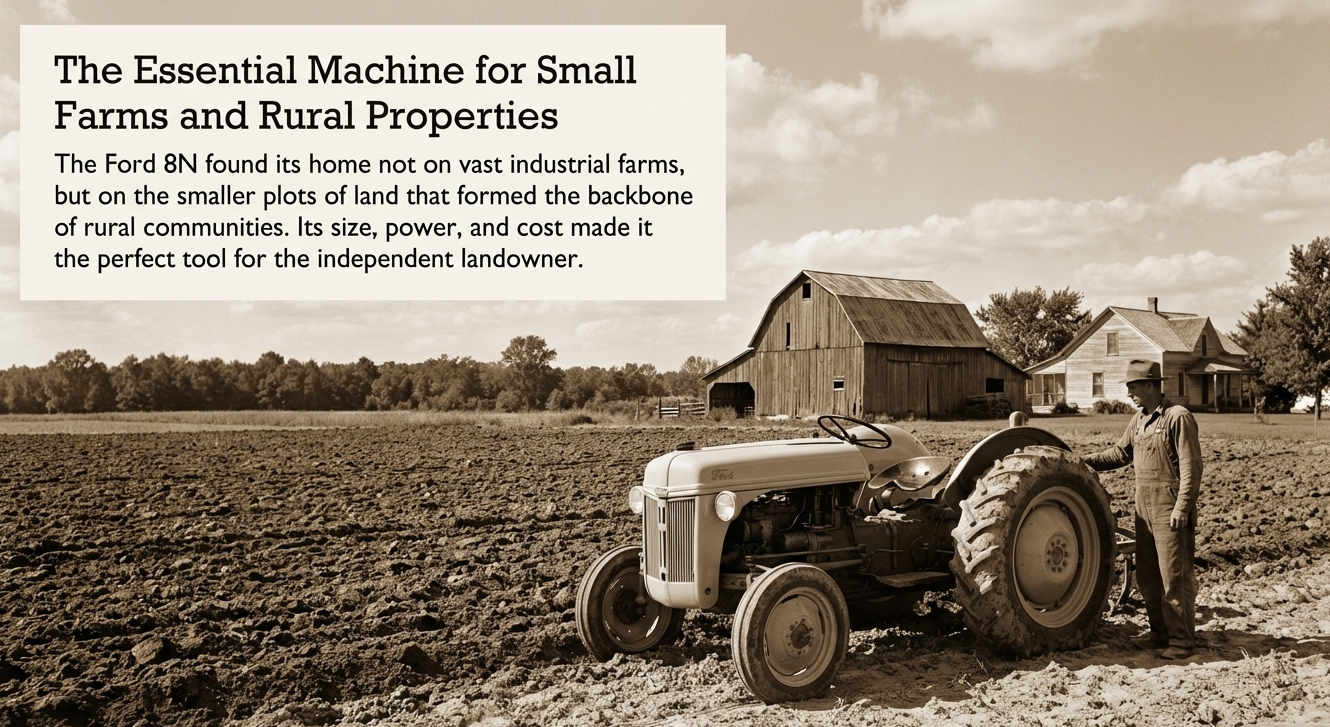
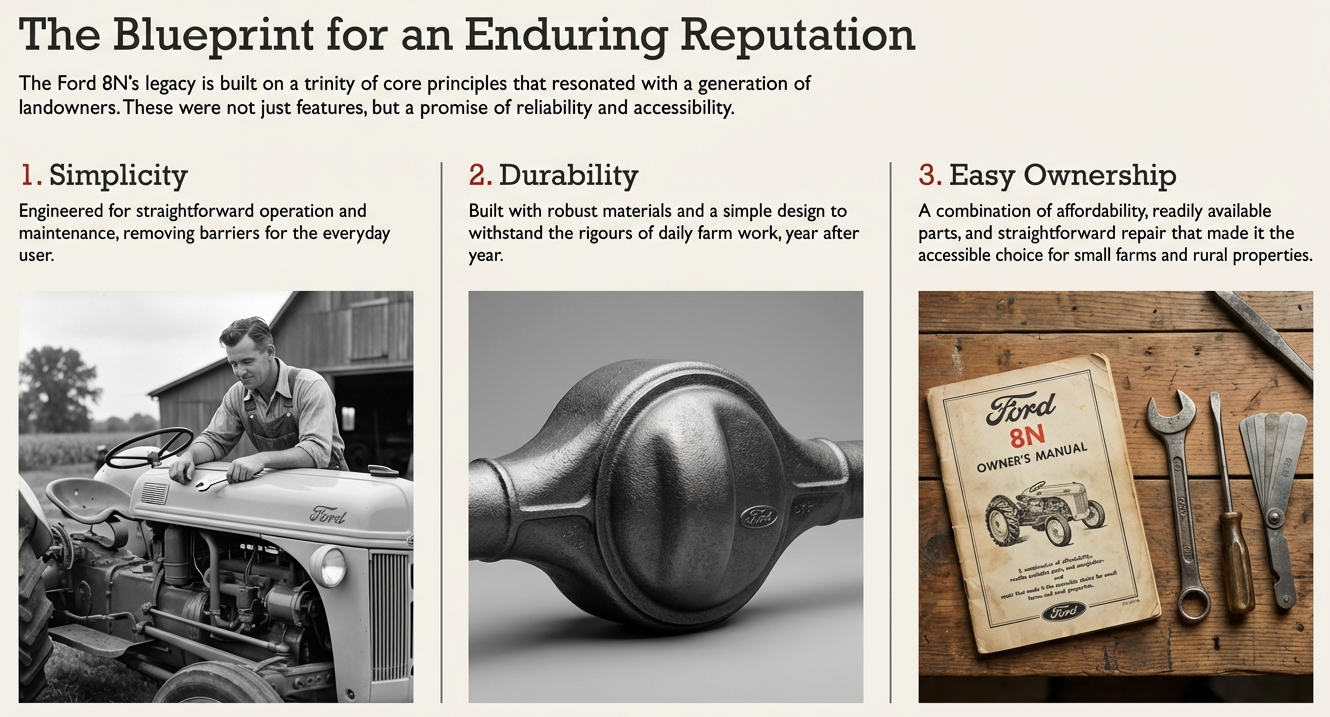
The Ford 8N is one of the most iconic tractors ever built, earning a reputation for simplicity, durability, and easy ownership. Popular on small farms and rural properties, it delivers dependable PTO horsepower for mowing, light tillage, and everyday chores.
This guide breaks down Ford 8N tractor specifications, real-world performance, maintenance needs, and resale value to help you decide if it’s the right tractor for your land.
General Overview
The Ford 8N is one of the most famous small farm tractors ever built, known for simple mechanics and strong parts support. In real-world work, these tractor specifications make it a great match for mowing, light tillage, blade work, and general chores where modest PTO horsepower is all you need.
Engine, Power & Performance
With a torquey 4-cylinder flathead, the 8N feels strongest at low-to-mid RPM for steady pulling and PTO jobs like brush mowing. It’s not a high-speed field tractor, but it delivers dependable power for chores, grading, and light tillage on small acreage.
Transmission, PTO & Hydraulics
The 4-speed is straightforward and well-suited for puttering around the farm, while the Category 1 hitch makes it compatible with a huge range of implements. For loader work, many 8Ns use aftermarket loaders; for mowing and light tillage, it’s a classic, practical setup.
Dimensions, Weight & Tires
The 8N is compact, easy to maneuver, and feels “small but stout” compared to modern compact tractors. With proper ballast and good rear tires, it’s stable for mowing and grading, though hills and loader setups require smart weighting and caution.
Electrical System & Attachments
- Rotary cutter / brush hog (540 PTO)
- Finish mower (light duty)
- Rear blade / box blade
- Disk harrow / small plow
- Post-hole digger
- Carry-all / rear scoop
- Snow blade (front or rear)
- Aftermarket front loader (common)
The Category 1 hitch and huge aftermarket make it easy to find implements that match the 8N’s PTO horsepower. Many tractors are upgraded to 12V alternator setups for easier starting and brighter lights, especially for chore use.
Price, Value & Resale
The 8N tends to hold value because it’s easy to work on, parts are widely available, and buyers recognize the model instantly. Clean running tractors with good tires and strong hydraulics typically sell quickly, while full restorations can command collector pricing.
Maintenance, Fluids & Service
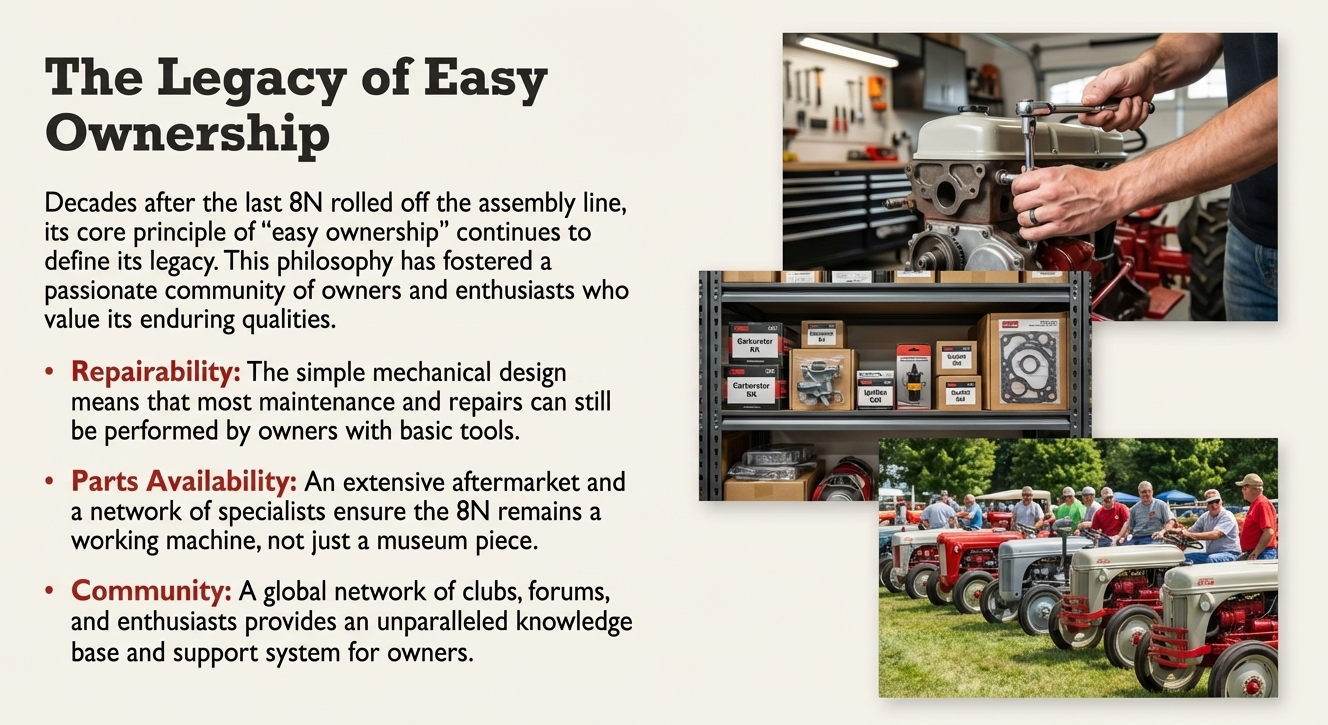
Serviceability is a big reason 8Ns are still working: basic tune-up parts are cheap, access is straightforward, and the design is friendly to DIY owners. Plan on regular fluid changes, ignition maintenance, and keeping the cooling system clean if it’s used for mowing or pulling.
Common Issues & Parts Compatibility
- Weak or leaking hydraulics (pump wear, internal leaks, lift drift)
- Ignition and wiring issues on older harnesses
- Cooling system neglect (radiator clogging, overheating under load)
- Steering play and front end wear on heavily used tractors
- Oil leaks and seepage common on high-hour engines
- Brake wear or uneven braking (especially if used on slopes)
Parts availability is excellent due to huge production numbers and aftermarket support. When shopping, focus on hydraulics lift strength, engine smoke, clutch feel, and steering tightness—those tell you the most about real condition.
Tractor Tests & Real-World Use
In real-world use, the Ford 8N is at its best with a rotary cutter, rear blade, small disk, or light plow—jobs where traction and steady PTO horsepower matter more than speed. For hay work, it can handle lighter-duty tasks, while tillage is realistic on smaller plots with appropriately sized implements. These tractor specifications make it a strong fit for hobby farms, rural property maintenance, and owners who want a simple, repairable classic that still earns its keep.
| Related: Ford 8N vs. 9N (and 2N): The Definitive Buyer’s & Owner’s Guide
Frequently Asked Questions
How much PTO horsepower does a Ford 8N have?
The Ford 8N produces about 23 PTO horsepower, which is enough for rotary cutters, rear blades, post-hole diggers, and other light-to-medium farm implements.
What size mower or brush hog can a Ford 8N run?
Most Ford 8N tractors handle a 4- to 5-foot rotary cutter comfortably. Heavier grass or uneven terrain usually favors a 4-foot mower for smoother operation.
Does the Ford 8N have live PTO?
No, the Ford 8N uses a transmission-driven PTO, meaning the PTO stops when the clutch is pressed. This is important to consider for mowing and other PTO-powered tasks.
Is the Ford 8N a good tractor for small farms or acreage?
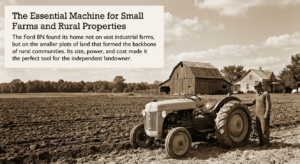
Yes. The Ford 8N is well-suited for 1–20 acres, especially for mowing, grading, light tillage, and general property maintenance on hobby farms.
What should you check before buying a Ford 8N?
Buyers should inspect hydraulic lift strength, engine smoke, steering play, clutch operation, and electrical condition to gauge overall tractor health.