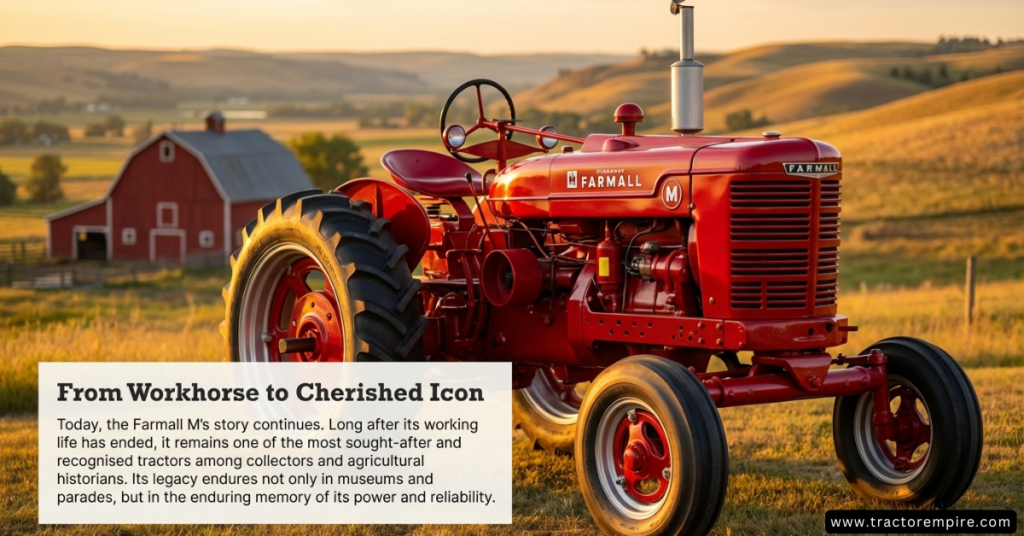
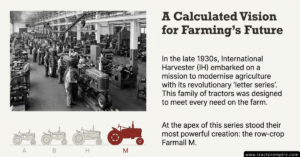
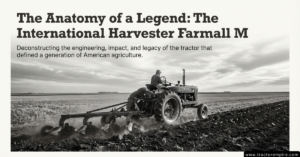
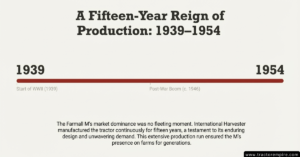
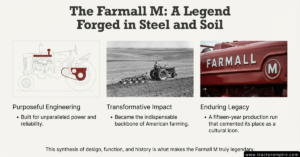
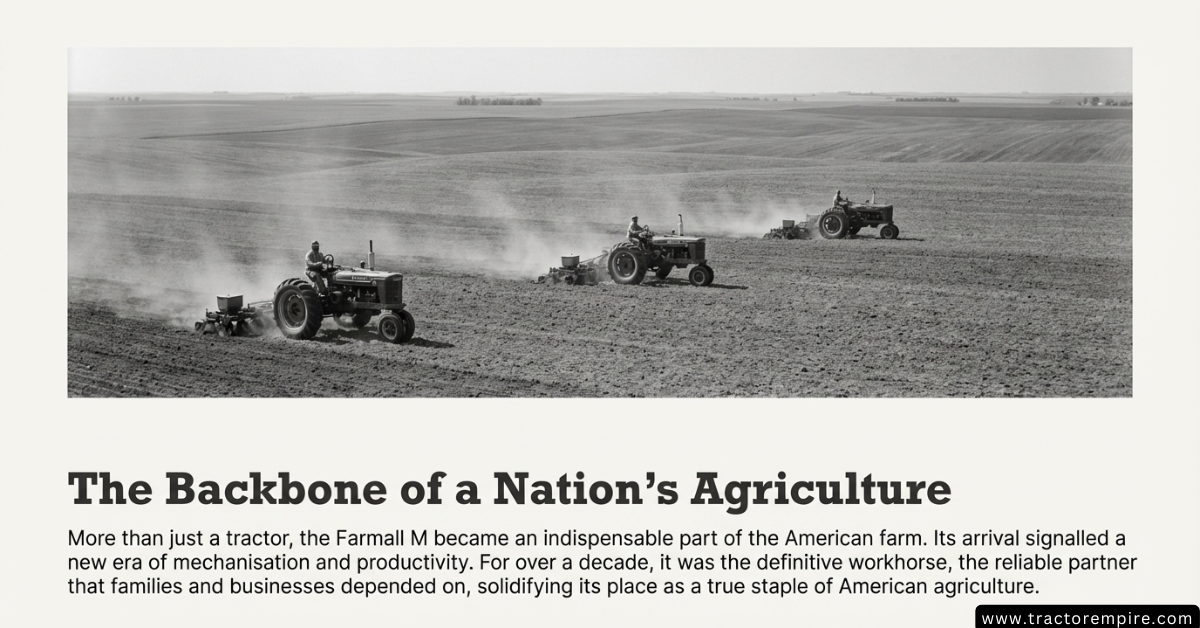
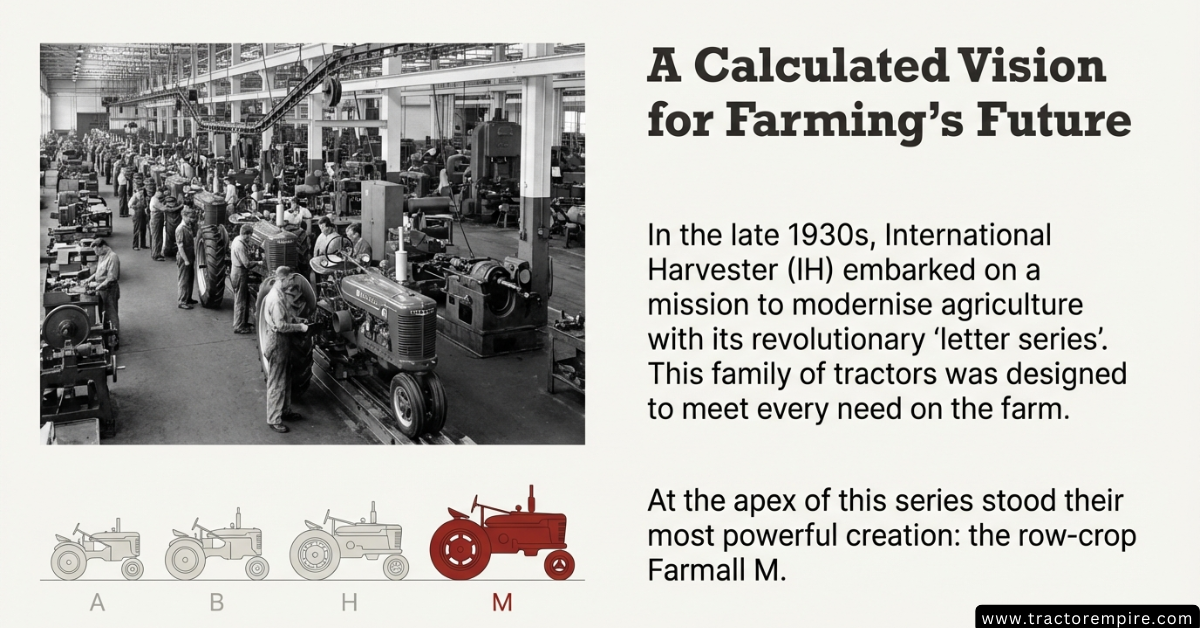
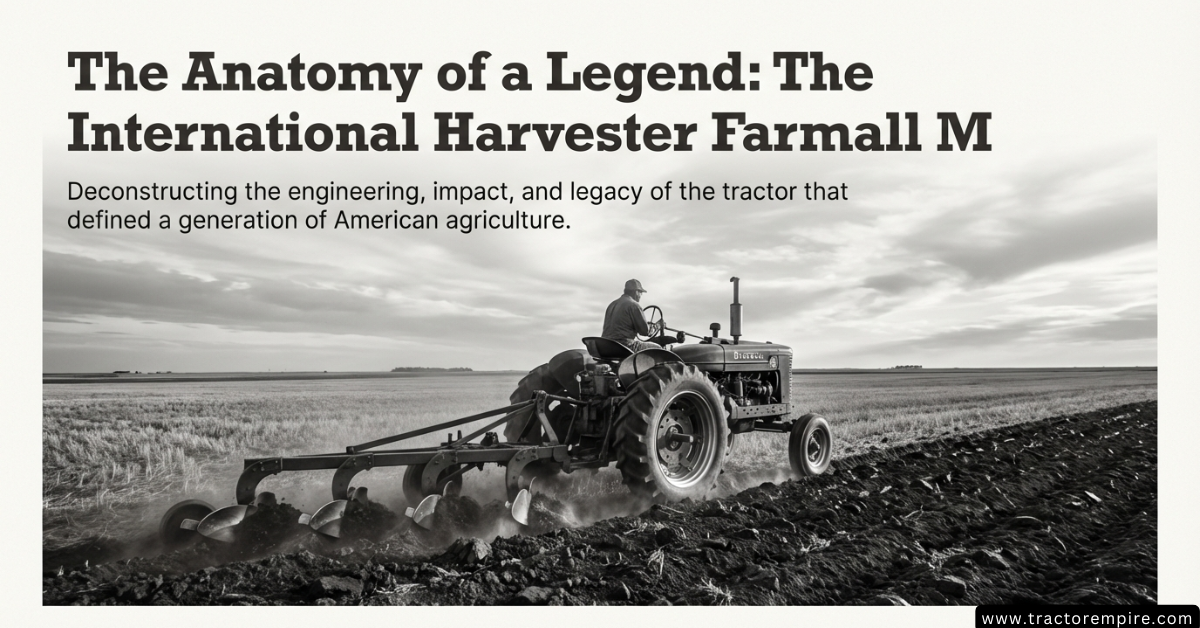
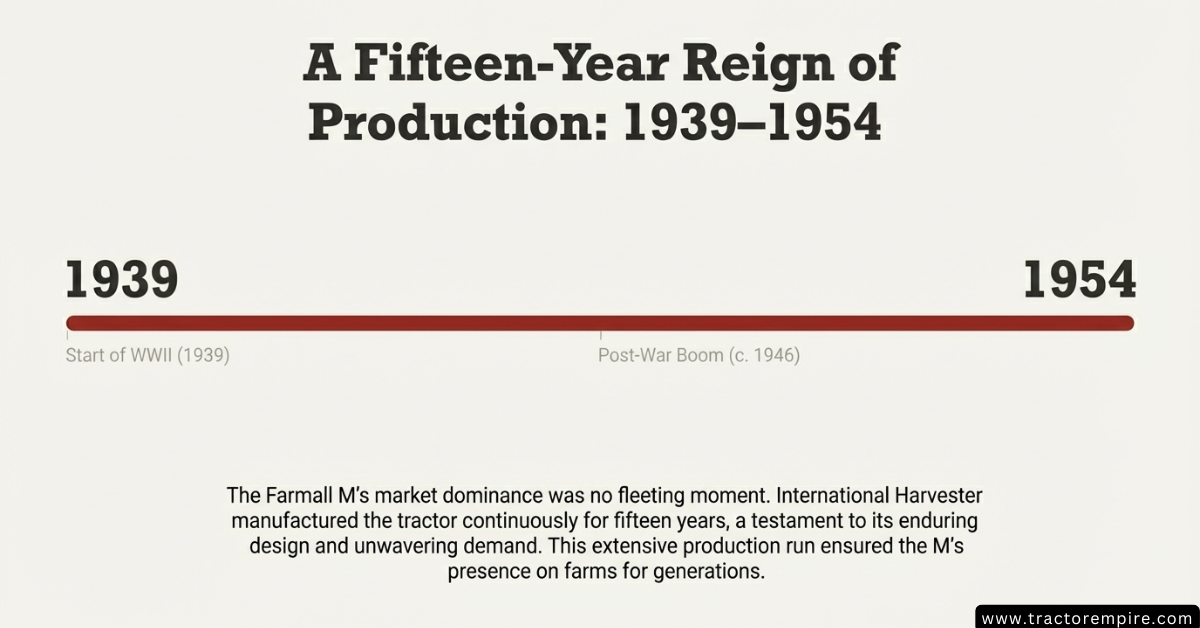
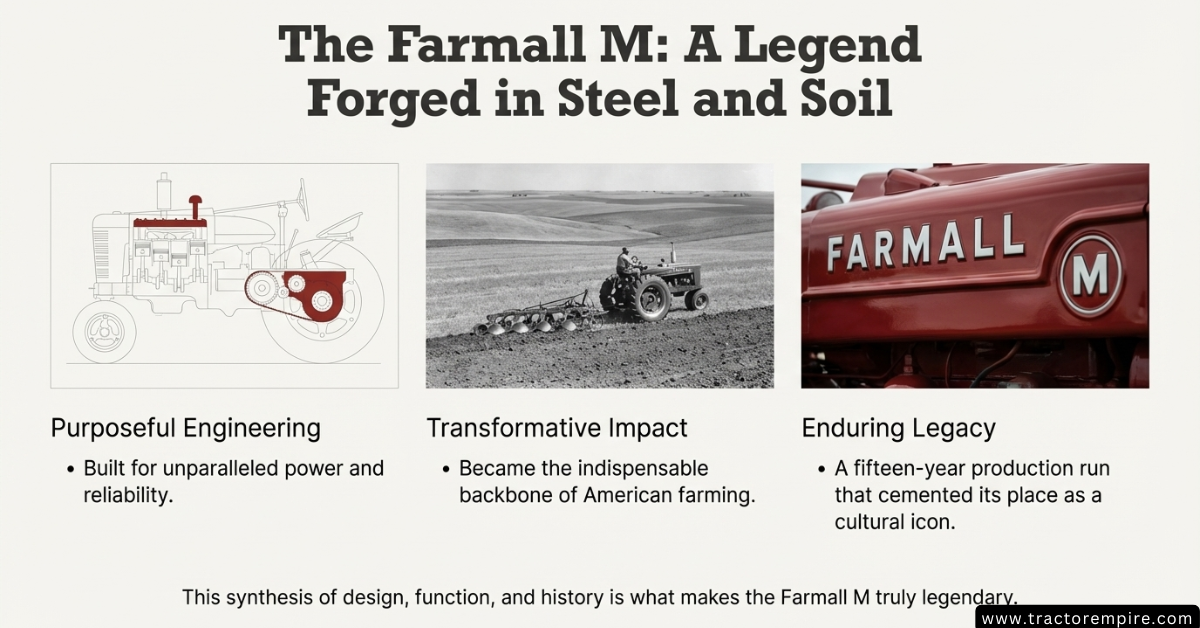
The Farmall M is one of the most iconic row-crop tractors ever built, known for its durability, simple design, and dependable PTO horsepower. Produced from 1939 to 1954, it became a staple on small and mid-sized farms for plowing, mowing, and hay work. Farmers valued its strong drawbar pull, easy maintenance, and wide parts availability. Even today, the Farmall M remains a practical working tractor and a highly respected collectible.
General Overview
The Farmall M is a classic row-crop workhorse built for 2–3 bottom plowing, cultivating, mowing, and daily chore duty. Its simple layout and strong parts support make it a favorite for hay work and light tillage, and Farmall M tractor specifications are still widely referenced today when comparing PTO horsepower for period-correct implements.
Engine, Power & Performance
In real field work, the Farmall M’s slow-turning 4-cylinder delivers steady pull and usable torque for plowing, disking, belt work, and PTO-driven mowing. With mid-30s tested PTO horsepower, it matches well to period sickle mowers, small balers, and light tillage tools.
Transmission, PTO & Hydraulics
The 5-speed gearbox is simple and durable, with a gear spread that works well for cultivating, mowing, and light tillage. For loader work, many tractors were equipped with Lift-All hydraulics or upgraded pumps; set up correctly, it can handle farm chores, but modern loaders often feel quicker with auxiliary hydraulics.
Dimensions, Weight & Tires
For its era, the Farmall M feels “full size” in the seat—stable on tillage tools, confident on the drawbar, and well balanced when properly ballasted. The narrow row-crop stance and adjustable tread help it track rows cleanly, while tire choice and ballast make a big difference in traction and ride quality.
Electrical System & Attachments
Implement versatility is a major reason the Farmall M remains popular—especially for farms that still run vintage or simple PTO equipment. With the right hitch setup and hydraulics, it’s easy to keep working with a wide mix of attachments.
- Front-end loader (farm chores, manure, dirt, snow)
- Sickle bar mower & pull-type haybine setups
- Small square baler (light-duty, correct PTO match)
- Disk harrow, field cultivator, spring-tooth harrow
- 2–3 bottom plow, pull-type tillage tools
- Wagons, grain augers, belt-driven equipment
- Rear blade, drag, and snow equipment (with ballast)
- Aftermarket 3-point and drawbar accessories
Price, Value & Resale
The Farmall M typically holds value well because it’s both collectible and genuinely useful on small acreage. Clean sheet metal, straight tin, strong mechanical condition, and correct options (hydraulics, PTO, lights) tend to bring the best resale.
Maintenance, Fluids & Service
Serviceability is one of the Farmall M’s strengths: basic tune-ups, fluid changes, and most adjustments are straightforward with common tools. Owners should plan on regular greasing, keeping the oil-bath air cleaner serviced, and staying ahead of seepage so small leaks don’t become big messes.
- Engine oil & filter service (routine protection for low-RPM torque work)
- Fuel system care (clean sediment bowl and keep tanks free of rust/debris)
- Cooling system upkeep (hoses, clamps, and radiator condition matter)
- Hydraulic seals/hoses (Lift-All systems often need fresh seals over time)
- Ignition tune-up (points, plugs, timing) for easy starts and smooth pull
Common Issues & Parts Compatibility
Like most vintage tractors, the Farmall M rewards a careful inspection before buying—especially on hydraulics, steering wear, and electrical condition. Parts availability is generally strong due to large production numbers and active collector support.
- Hydraulic seepage and slow response on Lift-All systems (seal and pump wear)
- Worn steering components leading to play (tie rods, worm/sector wear)
- Brake adjustment issues or uneven braking (band/brake wear and linkage)
- Fuel system contamination (tank rust, plugged screens, sediment buildup)
- Ignition and charging gremlins on older wiring (grounds and connections)
- Clutch wear or chatter (especially on heavily worked field tractors)
- Rear tire and rim corrosion (calcium ballast damage on stored tractors)
- Cross-compatibility within IH “Letter Series” era parts ecosystems
Tractor Tests & Real-World Use
Nebraska test data shows why the Farmall M earned its reputation: strong drawbar pull and solid tested PTO horsepower for the late-1930s/1940s era. In practical use, it’s a great fit for small farms, hobby operations, and acreage owners who want a dependable vintage row-crop tractor for mowing, light tillage, wagons, and seasonal hay work without stepping up into heavier modern iron.
- Best match: 5–80 acres depending on terrain and implement size
- Great for: mowing, raking, wagons, light tillage, cultivating, chores
- Works with: period-correct small balers and PTO tools when properly set up
- Ballast and tire condition are key for traction in plowing and disk work
Frequently Asked Questions
What is the PTO horsepower of a Farmall M?
The Farmall M produces about 34 PTO horsepower based on Nebraska tractor tests, making it suitable for mowing, hay work, and light tillage.
What years was the Farmall M produced?
The Farmall M was built from 1939 through 1954, with many variations produced during its long production run.
How much does a Farmall M weigh?
A Farmall M typically weighs between 4,800 and 6,700 pounds, depending on ballast, tire size, and configuration.
Is the Farmall M good for modern farm use?
Yes, it still performs well for small farms, acreage owners, and hobby operations, especially for mowing, raking, and wagon work.
What type of fuel does the Farmall M use?
Most Farmall M tractors run on gasoline, though some were built for distillate fuel, and diesel variants were sold as the Farmall MD.
What should I check before buying a Farmall M?
Inspect the engine condition, hydraulics, steering play, brakes, and rear rims, and confirm that the PTO and hydraulics operate smoothly.