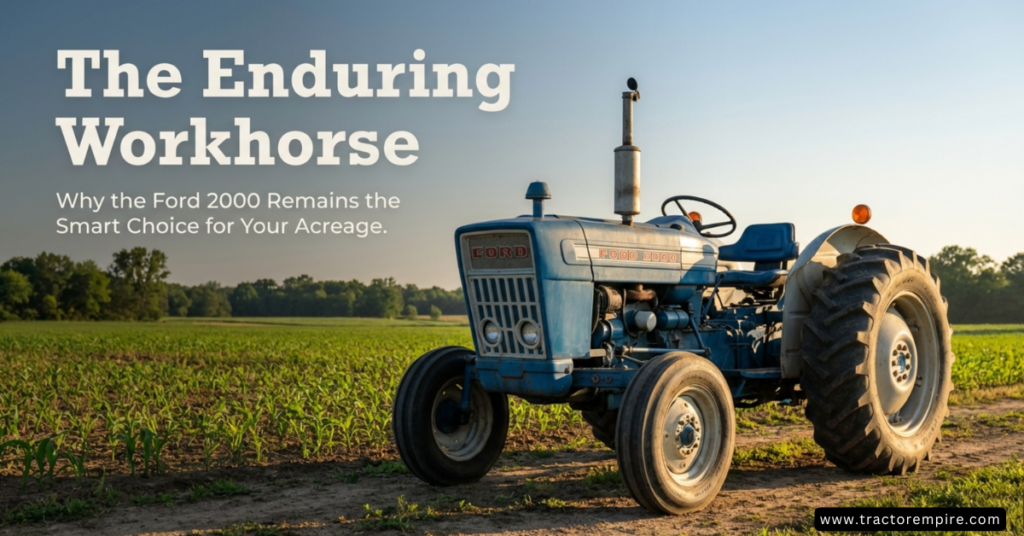
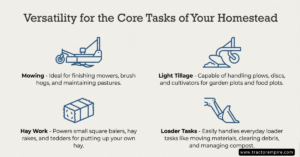
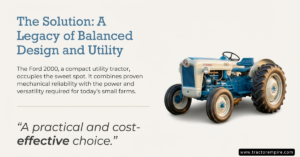
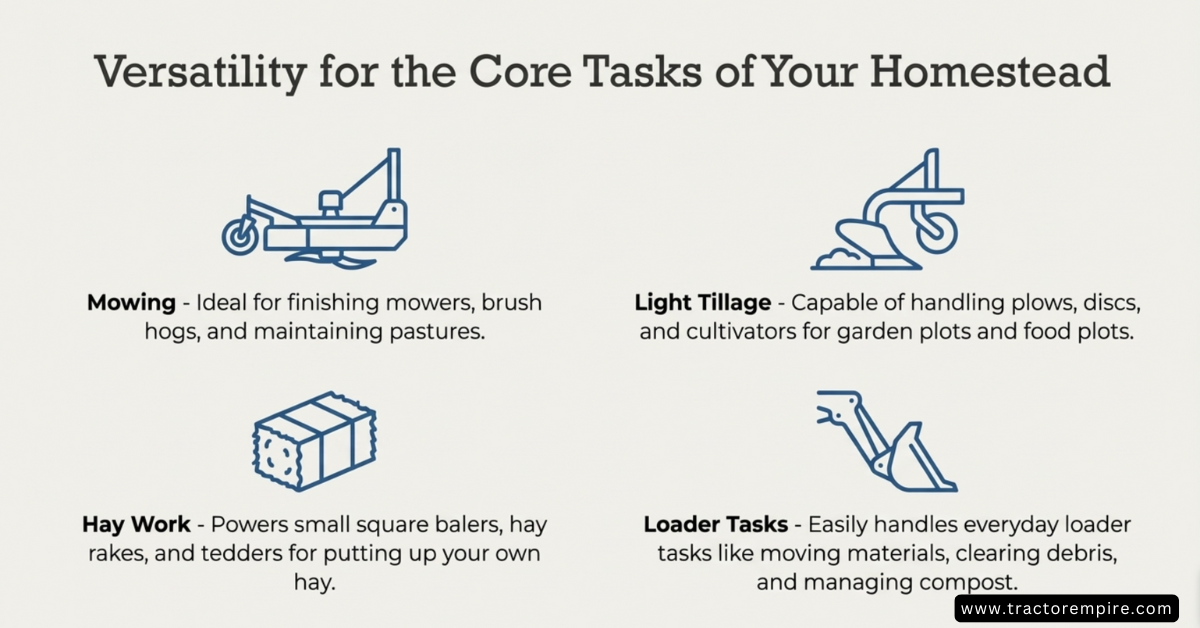
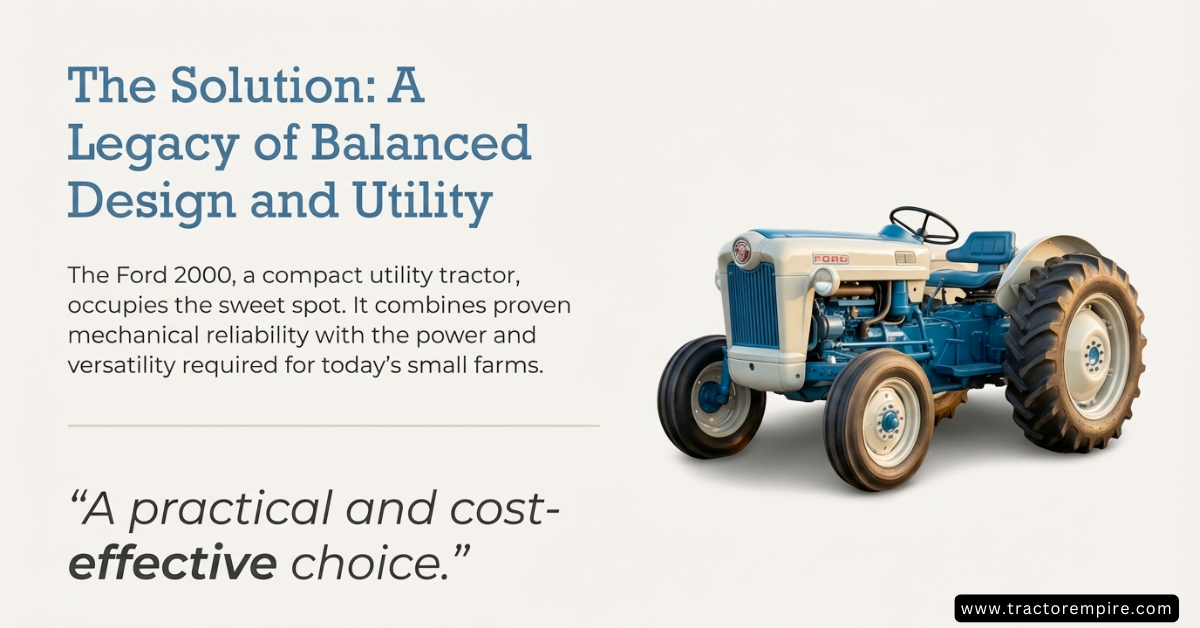
The Ford 2000 is a compact utility tractor known for its reliability, simple design, and real-world versatility on small farms and rural properties. With roughly 30+ PTO horsepower, it’s well suited for mowing, light tillage, hay work, and everyday loader tasks. Farmers and landowners still value its balanced tractor specifications, easy serviceability, and strong parts availability decades after production ended.
Whether you’re comparing used tractors or matching implements by PTO horsepower, the Ford 2000 remains a practical and cost-effective choice for acreage owners and hobby farms.

General Overview
The Ford 2000 is a classic small utility machine that still shines in real work—mowing, loader work, light tillage, and hay handling. Its tractor specifications make it especially easy to match implements by PTO horsepower, keeping setups realistic for 5–50 acre farms and property owners.
Engine, Power & Performance
In the field, the Ford 2000 feels stronger than the numbers suggest because it makes usable torque at working RPM. That’s why it’s a favorite for steady PTO jobs like brush cutting and finish mowing, plus light ground engagement where traction and gearing matter as much as horsepower.
Transmission, PTO & Hydraulics
For loader work and chores, the Ford 2000’s straightforward open-center hydraulics are predictable and easy to live with. With the right gearing (especially the multi-speed setups), it can crawl for tillage or keep a steady PTO pace for hay work and mowing without feeling frantic.
Dimensions, Weight & Tires
Size-wise, the Ford 2000 is small enough to maneuver around tight barns and gates, but heavy enough to feel planted with a 3-point implement. Proper rear ballast and matched tire sizing make a noticeable difference in stability and traction when it’s doing real loader work.
Electrical System & Attachments
The Ford 2000 is a true “do-a-little-of-everything” tractor, and its tractor specifications pair nicely with common 540 PTO implements. With a Category I 3-point and a proven platform, it’s easy to build a practical attachment lineup that fits both farm chores and property maintenance.
- Front-end loader (farm & light material handling)
- Rotary cutter / brush hog (540 PTO)
- Finish mower / rear blade / box blade
- Disc harrow / cultivator / small plows
- Post hole digger / spreader / sprayer
- Snow blade / rear snow blower (by PTO setup)
Price, Value & Resale
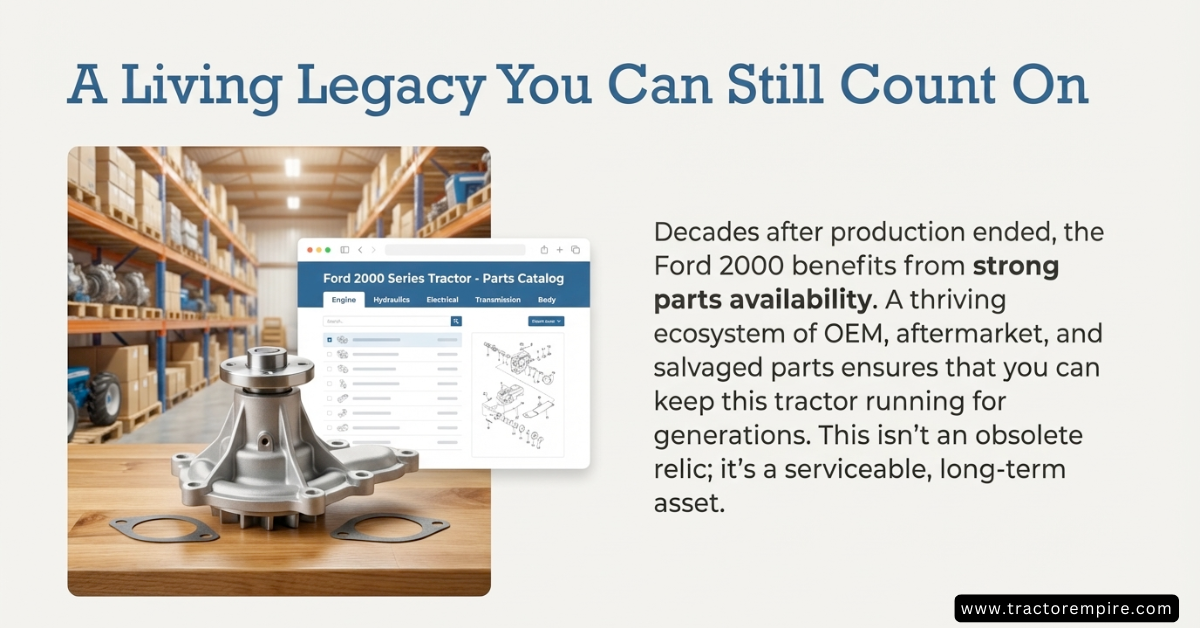
The Ford 2000 tends to hold value because it’s simple, parts support is strong, and it’s sized right for modern small-acreage demand. The biggest price swings usually come from steering condition, tire life, and whether it’s already set up for loader work.
Maintenance, Fluids & Service
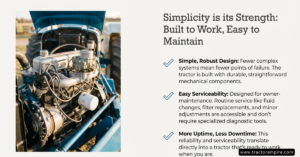
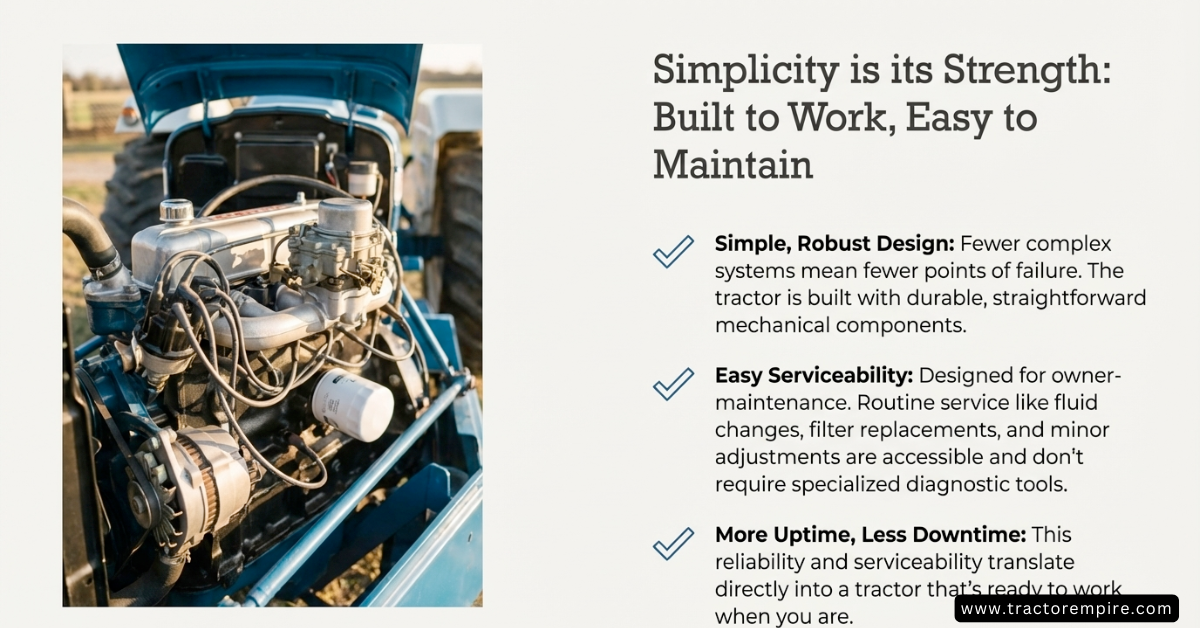
Serviceability is one reason these tractors stay popular: routine filters and fluids are straightforward, and most wear items are easy to source. Plan on regular steering and front-end inspections if it has carried a loader, and keep hydraulic oil clean to protect the pump and lift.
- Warm up before heavy PTO work to stabilize oil pressure and coolant temp
- Check front spindle/bushing play and steering linkage at every oil change
- Keep air cleaner serviced for consistent PTO horsepower under load
- Verify 540 PTO engagement feels crisp and doesn’t chatter under load
Common Issues & Parts Compatibility
Most Ford 2000 problems today are normal age-and-hours items rather than “bad design” issues. A careful pre-buy check will tell you quickly if it’s a bargain or a project.
- Steering wear (especially tractors that did years of loader work)
- Hydraulic seepage at hoses, lift cover, and remote connections
- PTO engagement wear or linkage adjustment issues
- Charging/starting gremlins on generator-equipped setups
- Brake adjustment and shoe wear on mechanical brakes
- Cooling system neglect (old hoses, weak thermostat, dirty radiator)
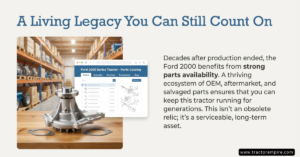
Parts availability is generally strong because the Ford 3-cylinder platform is widely supported. When buying, match components to the exact transmission/PTO configuration so clutch and PTO parts line up correctly.
Tractor Tests & Real-World Use
On paper, the Ford 2000 sits in the low-30s for PTO horsepower in tested form, which is exactly why it pairs so well with common 5-foot PTO tools. In real-world use, it’s a strong fit for small farms, horse properties, and acreage owners who want proven tractor specifications without the size and cost of a larger utility machine.
- Mowing: 5’ rotary cutter and finish mower work well when matched to grass density
- Hay work: handles raking, tedding, and light square-baler duty with the right gearing
- Tillage: best for smaller discs, cultivators, and light plows where traction is managed
- Loader work: capable with ballast; steering condition matters more than raw power
Frequently Asked Questions
What is the PTO horsepower of a Ford 2000 tractor?
The Ford 2000 produces roughly 30–32 PTO horsepower, depending on engine type and test configuration, making it suitable for 5-foot PTO implements.
What years was the Ford 2000 tractor made?
The 3-cylinder Ford 2000 was produced from 1965 to 1975, replacing the earlier 4-cylinder version from the early 1960s.
Is the Ford 2000 a good tractor for loader work?
Yes, the Ford 2000 handles light to moderate loader work well when properly ballasted, though steering and front-end condition are critical on used models.
What size rotary cutter can a Ford 2000 run?
With its PTO horsepower class, the Ford 2000 can comfortably run a 5-foot rotary cutter in most grass and light brush conditions.
How much does a Ford 2000 tractor weigh?
Depending on configuration and ballast, the Ford 2000 weighs approximately 3,300 to 4,100 pounds, which helps with traction and stability.
Is the Ford 2000 good for small farms and acreage?
Yes, it’s a popular choice for small farms, hobby farms, and acreage owners due to its simple tractor specifications, strong parts support, and proven reliability.