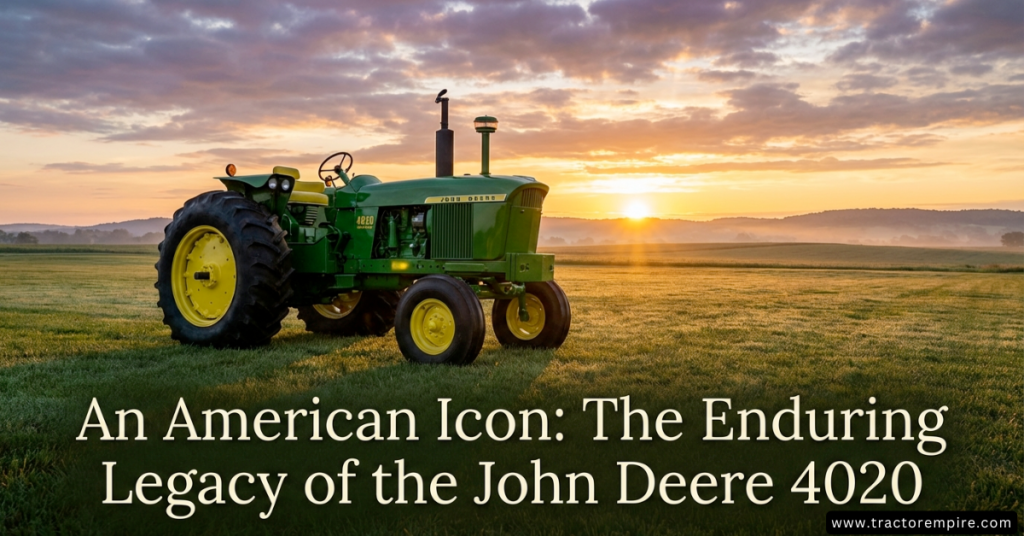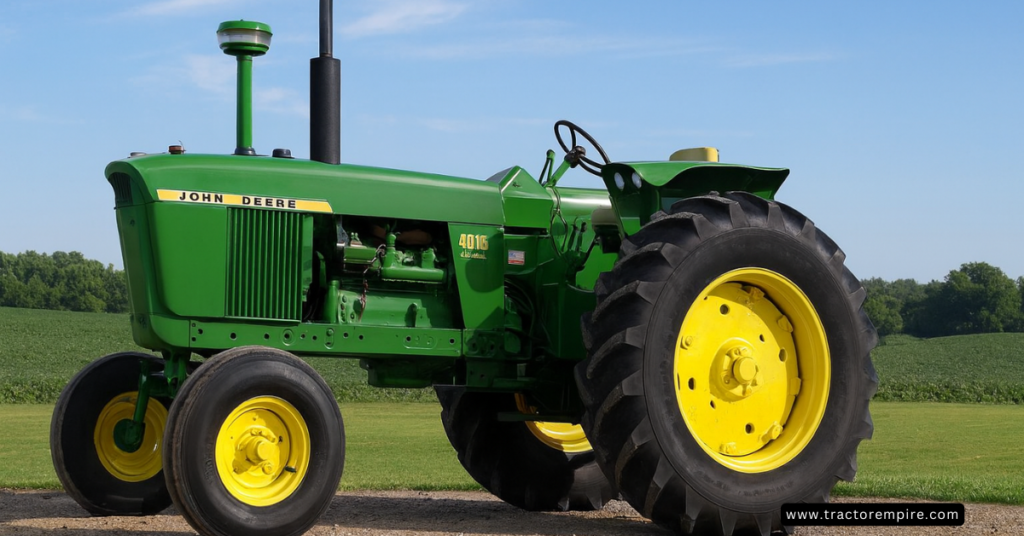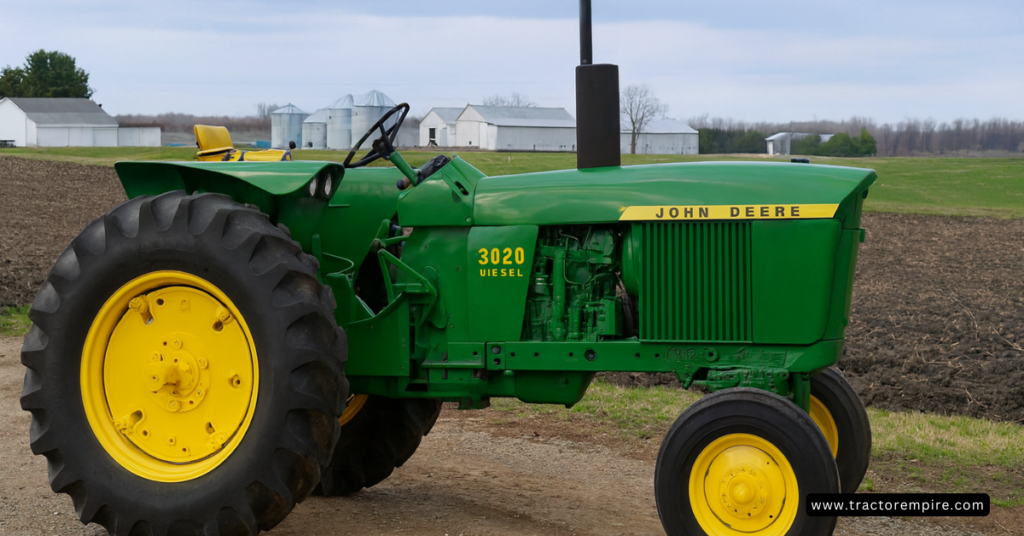
The John Deere 3020 is a classic row-crop tractor that continues to earn its place on small farms and acreage properties. Known for its reliable PTO horsepower and strong hydraulics, it handles hay work, loader work, mowing, and light tillage with confidence. These John Deere 3020 tractor specifications break down engine performance, transmission options, weight, and real-world usability.
If you’re considering one for work or collection, this guide highlights what actually matters in daily operation.
General Overview
The John Deere 3020 is a classic row-crop tractor that still earns its keep on small farms and acreage properties. These tractor specifications make it a strong all-around machine for hay work, loader work, mowing, and light tillage, with plenty of usable PTO horsepower for common implements and bale handling.
Engine, Power & Performance
In the field, the 3020’s power delivery is smooth and predictable, which is exactly what you want for baling, mowing, and steady loader work. It has enough torque for light-to-moderate tillage and pulls well for its size when it’s properly tuned and ballasted.
Transmission, PTO & Hydraulics
For loader work and hay work, the 3020’s hydraulics are a big reason it still feels “modern” compared to many tractors from the same era. With the right transmission and a healthy hydraulic system, it’s easy to run mower conditioners, round balers, and common tillage tools.
Dimensions, Weight & Tires
The 3020 feels like a “right-sized” row-crop tractor—big enough to be stable with a loader and heavy rear implements, but not so large that it’s awkward for mowing and chore work. Tire and tread settings can be adjusted a lot, which helps dial in ride and stability for your terrain.
Electrical System & Attachments
With standard hydraulics and PTO options, the 3020 is very flexible for common farm and acreage attachments. It’s a popular platform for building a capable “do-everything” tractor when paired with the right implements.
- Front-end loaders (farm loaders, quick-attach buckets)
- Rotary cutters & finish mowers (PTO-driven)
- Round/square balers and hay rakes
- Disks, cultivators, small plows, and seeders
- Post-hole diggers and rear blades
- Snow blades / snow blowers (setup dependent)
- Wagons, gravity boxes, and light grain handling
- Sprayers and small manure spreaders
Price, Value & Resale
The 3020 is widely considered a strong resale tractor because it’s useful, familiar to mechanics, and supported by a huge parts ecosystem. Clean tractors with good hydraulics and a solid transmission typically hold value well, especially when set up for loader work and hay work.
Maintenance, Fluids & Service
The 3020 is generally straightforward to service, and most wear items are easy to source. Keeping clean fuel, staying on top of hydraulic filters, and checking for seepage at common leak points goes a long way toward long-term reliability.
- Warm it up before heavy PTO work to protect the hydraulic system
- Watch hydraulic oil cleanliness—dirty oil causes expensive problems
- Inspect steering/play and front axle wear if it has lived with a loader
- Keep electrical connections clean to avoid intermittent starting/charging issues
Common Issues & Parts Compatibility
Like any vintage Deere that’s done real work, condition matters more than paint. A careful inspection of hydraulics, steering, and PTO engagement will usually tell you whether it’s a good buy or a project tractor.
- Hydraulic leaks at hoses, couplers, and aging seals
- Steering wear/play (especially on loader tractors)
- PTO engagement/operation issues from wear or adjustment
- Charging/starting problems from tired wiring or connections
- Clutch wear and shifting feel (depends on transmission type)
- Cooling system neglect (radiator scaling, hose aging)
- Brake wear/adjustment needed after years of use
- Common parts availability is strong due to wide model support
Tractor Tests & Real-World Use
In real-world use, the John Deere 3020 is a practical fit for small farms, hay producers, and acreage owners who want a proven row-crop tractor with usable PTO horsepower and strong tractor specifications for everyday work. It shines running balers, rakes, cutters, and wagons, and it’s a confident loader tractor when properly ballasted and maintained for chores and feed handling.
- Hay work: Great for raking, tedding, and powering common balers within its PTO range
- Loader work: Stable and capable; check front-end wear and hydraulic health
- Tillage: Best for light-to-moderate ground engagement depending on soil and implement size
- Mowing: Handles rotary cutters and finish mowers with steady power delivery
- Best fit: Small farms, hobby farms, and mixed-use operations needing a reliable all-rounder
Frequently Asked Questions
What is the PTO horsepower of a John Deere 3020?
The John Deere 3020 typically delivers around 65–75 PTO horsepower, depending on engine type, condition, and test method. This places it in a solid mid-range horsepower class for hay work, mowing, and running common PTO-driven implements.
What engine options were available on the John Deere 3020?
The 3020 was offered with gasoline and diesel engine options, both based on John Deere’s proven four-cylinder design. The diesel version is generally preferred today for its torque, fuel efficiency, and longevity in real-world farm use.
Is the John Deere 3020 good for loader work?
Yes, the John Deere 3020 is well-suited for loader work, especially when properly ballasted and maintained. Its closed-center hydraulic system provides strong, responsive performance compared to many tractors from the same era.
What transmission options does the John Deere 3020 have?
Common transmission options include Syncro-Range and Power Shift, depending on year and configuration. Transmission choice significantly affects ease of use, especially for loader work and frequent direction changes.
How much does a John Deere 3020 weigh?
Operating weight typically ranges from 6,500 to over 8,000 pounds, depending on tires, ballast, and attachments. This weight helps with stability during tillage, loader work, and heavy PTO applications.
What should you inspect before buying a used John Deere 3020?
Key areas to inspect include the hydraulic system, PTO operation, steering wear, clutch engagement, and electrical condition. A tractor with strong hydraulics and smooth shifting is usually a much better long-term investment than one with cosmetic appeal alone.