If you’re shopping for a compact tractor in 2026, you’ve picked the perfect time to buy. The compact utility tractor market has exploded with innovation this year, cleaner diesel engines, smart telematics that track your machine’s health from your phone, and even electric tractors that charge overnight while you sleep.
Here’s what you need to know right now: A quality compact tractor in the 25 HP range will handle mowing, loader work, snow removal, and ground-engaging tasks on properties from 1 to 50 acres. But with dozens of tractor brands competing for your money, how do you choose the right one?
I’ve spent 20 years working with heavy equipment systems and analyzing machinery specifications across multiple industries. This guide helps you look past the brochures and sales pitches to understand what truly matters in a compact tractor, from inflated lift-capacity specs to the real costs of owning one long-term.
Key Takeaways
- Most compact tractors cap at 25 HP to avoid expensive emissions equipment (DPF/DEF systems)
- Kubota and John Deere hold resale value 10-15% better than other brands
- Your implement budget should equal 30-40% of your tractor purchase price
- Hydrostatic transmissions (HST) dominate the market but aren’t always the best choice
- Electric compact tractors now offer legitimate alternatives for specific use cases
Quick-Glance Comparison: Top 5 Compact Tractors of 2025
Before we dive deep, here’s how the leading compact utility tractor models stack up side-by-side:
| Model | HP Range | Transmission | Lift Capacity | Starting Price | Best For |
|---|---|---|---|---|---|
| John Deere 3025E | 25 HP | Hydrostatic | ~1,186 lbs | $23,000+ | Resale Value & AutoConnect Deck |
| Kubota L2501 | 24.8 HP | HST/Gear | ~1,131 lbs | $22,000+ | Legendary Reliability |
| Mahindra 1626 | 25.9 HP | HST/Shuttle | ~1,560 lbs | $20,500+ | Maximum Lift Per Dollar |
| Kioti CK2610 | 24.5 HP | HST/Manual | ~1,631 lbs | $19,500+ | Value & Standard Features |
| Solectrac e25G | 25 HP (Equiv) | Electric | ~1,300 lbs | $29,000+ | Zero Emissions & Instant Torque |
John Deere 3025E
$23,000+
Kubota L2501
$22,000+
Mahindra 1626
$20,500+
Kioti CK2610
$19,500+
Solectrac e25G
$29,000+
Note: Prices vary by region and dealer. Always verify lift capacity measurements at 24 inches behind the pivot pin, not the manufacturer’s “best case” specs.
The 2025 Buying Framework: How to Actually Choose Your Tractor
The 25 HP Sweet Spot: Why Everyone Stops Here
You’ll notice that most compact tractors cluster around 25 HP. This isn’t a coincidence; it’s an emissions strategy.
Tractors above 25 HP must include Tier 4 Final emissions equipment: Diesel Particulate Filters (DPF) and Diesel Exhaust Fluid (DEF) systems. These add $3,000-$5,000 to the purchase price and create ongoing maintenance headaches. Regeneration cycles can interrupt your work, and DPF filters eventually need replacement.
The reality check: For small property owners, 25 HP handles 90% of tasks beautifully. You’ll mow pastures, move pallets, till garden plots, and clear snow without breaking a sweat.
PTO Horsepower vs. Engine Horsepower: What Actually Matters
Here’s where spec sheets get tricky. A tractor advertised as “25 HP” might only deliver 18-20 HP at the PTO (Power Take-Off). That’s the power available to run your mower, tiller, or post-hole digger.
When you’re looking at compact utility tractors for ground-engaging work like bush hogging or rotary cutting, always ask your local dealer for the PTO HP rating. That’s the number that determines whether your implementation will bog down mid-job or power through cleanly.
Transmission Wars: HST vs. Gear Drive
This decision splits tractor owners into passionate camps.
Hydrostatic (HST): The Modern Standard Popular Choice
Best for: Loader work, mowing, and operators who value ease of use
- Infinitely variable speed control
- Perfect for frequent direction changes (loader work)
- Easier learning curve for first tractor buyers
- Smoother operation when mowing
- Higher initial cost ($1,500-$2,500 premium)
- Slightly less efficient on steep hills under heavy load
- More complex hydraulic system to maintain
Gear/Shuttle Shift: The Traditional Choice Classic
Best for: Tilling, plowing, and tasks requiring constant speed
- Lower purchase price
- Better fuel efficiency
- Holds speed more consistently on inclines
- Simpler mechanical system
- Requires clutching and shifting
- Awkward for loader work
- Steeper learning curve
My take: Unless you’re primarily tilling or running a PTO-driven implement at constant speed, the HST’s convenience justifies the extra cost for most small property owners.
Lift Capacity: The Numbers Game Manufacturers Play
This is where you need to pay attention, loader lift capacity specs are deliberately misleading.
Manufacturers measure lift capacity at the pivot point (where the bucket connects to the loader arms). But in real-world use, you’re lifting material in the bucket’s center, which sits 24+ inches in front of that pivot point.
Example: A tractor advertising “1,600 lbs lift capacity” might only handle 1,100 lbs when measured at a realistic 24 inches behind the pin.
What to ask your dealer: “What’s the lift capacity measured at 24 inches behind the loader pin?”
If they don’t know, they’re reading marketing specs, not engineering data. The Mahindra 1626 and Kioti CK2610 genuinely excel here, they deliver impressive lift numbers even when measured honestly.
4WD and Tire Selection: The Hidden Performance Factor
Almost every compact tractor you’ll consider comes standard with 4WD. The real decision is tire choice.
R1 Agricultural Tires
- Deep tread for maximum traction in mud and soft soil
- Tears up manicured lawns
- Best for: Food plots, farming applications
R4 Industrial Tires
- Shallow tread, wider footprint
- Gentler on turf but less traction
- Best for: Landscaping, maintained properties
R14 Hybrid Tires (The 2026 Favorite)
- Compromise between R1 and R4
- Adequate traction without destroying grass
- Best for: Mixed-use properties (the most common scenario)
Pro tip: R14 tires have become the default recommendation for hobby farms and small property owners. They handle 80% of conditions well instead of 100% of one condition perfectly.
In-Depth Reviews: The “Best Of” Categories
Best Overall All-Rounder: Kubota L Series (L2501/L3302)
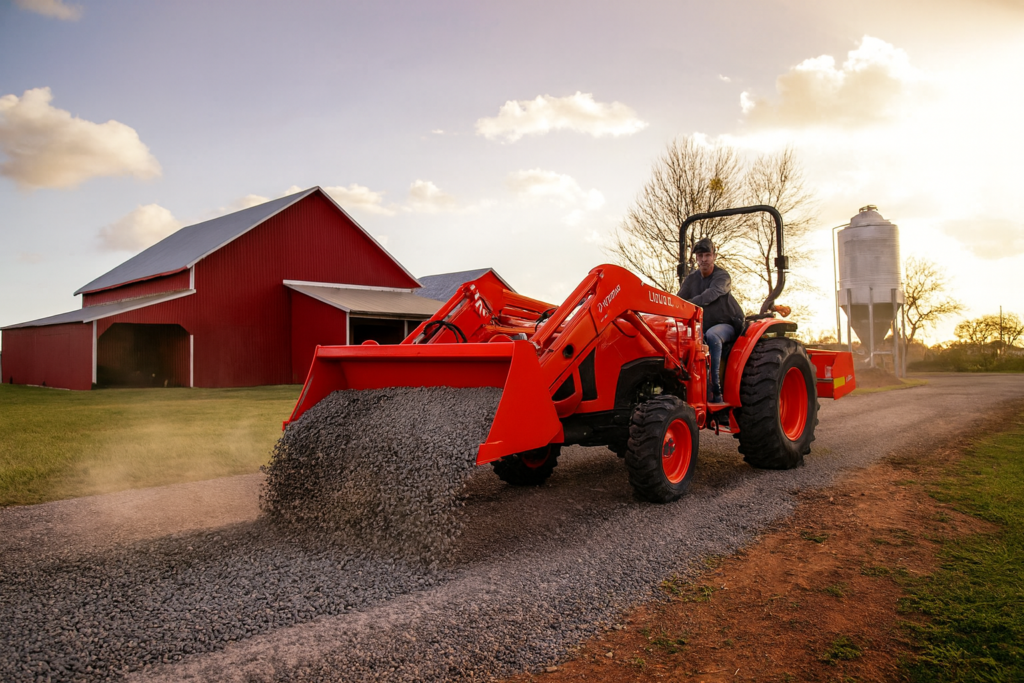
Kubota tractors dominate small farm and small jobs conversations for good reason. The Kubota L2501 has achieved legendary status among tractor owners and enthusiasts.
Why it wins:
- Bullet-proof reliability (these tractors routinely hit 5,000+ hours)
- Massive dealer network ensures parts and service availability
- Resale value that rivals John Deere
- HST or gear transmission options
The learning curve: Kubota uses a “treadle pedal” for HST models instead of separate forward/reverse pedals. Some operators love it; others take 5-10 hours to adjust. Test drive before buying.
Real talk: You’ll pay a premium for the orange paint, but Kubota’s reputation isn’t marketing hype. These are genuinely great tractors that hold value better than almost anything except green machines.
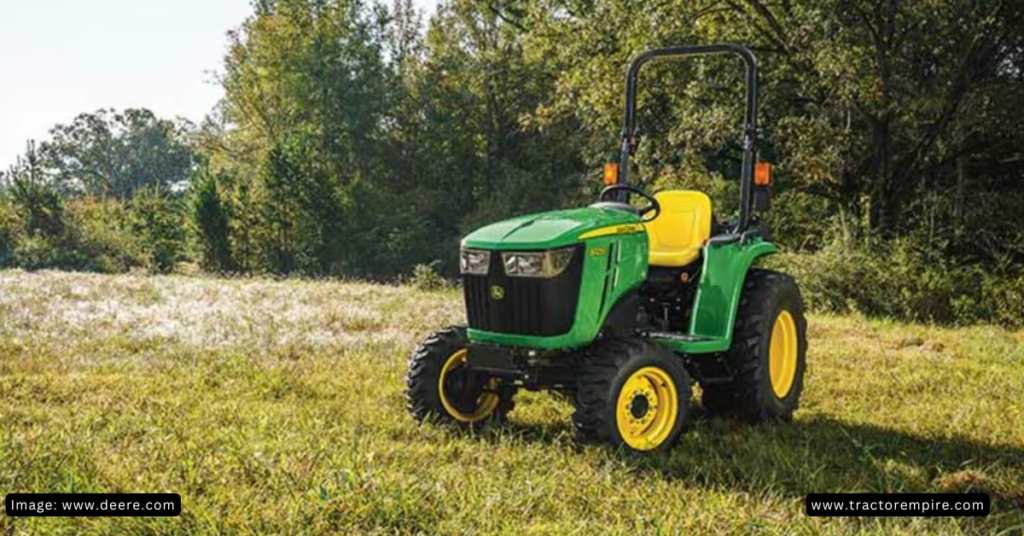
Best Premium Experience: John Deere 3 Series (3025E/3038E)
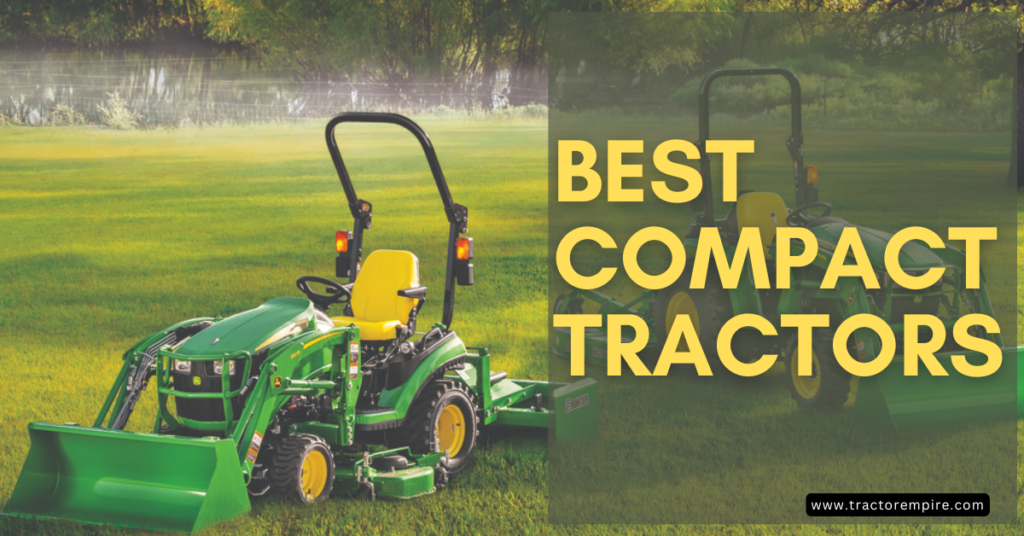
If you want the best ergonomics, long-term reliability, and dealer support in the industry, John Deere compact tractors set the standard, especially in the small tractor category.
Under the hood, the 3 Series is powered by a proven Yanmar diesel engine, widely regarded as one of the most reliable small-tractor engines ever built. These engines are known for smooth power delivery, excellent fuel efficiency, and long service intervals, exactly what you want if you’re putting steady hours on a compact machine year after year.
What justifies the price:
- Yanmar diesel engine – quiet, fuel-efficient, and built to run for thousands of hours with minimal issues
- “Twin Touch” foot pedals (separate forward/reverse) that feel more natural than competitors
- iMatch quick-hitch system (attaching implements takes ~30 seconds instead of 10 minutes)
- AutoConnect drive-over mower deck (this feature alone sells tractors)
The AutoConnect advantage:
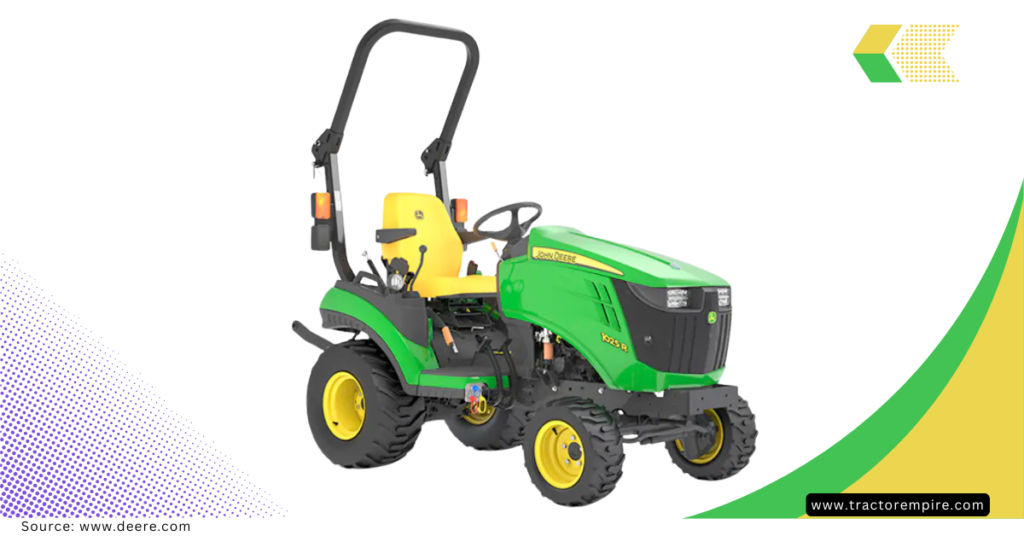
With most tractors, connecting a mower deck requires crawling underneath to hook up PTO shafts and lift arms. The John Deere 2025R and similar models let you drive over the deck and connect everything hydraulically from the seat.
If you’re mowing weekly, this feature saves 10+ minutes every session. Over a season, that’s hours of your life back.
The premium tax:
Expect to pay 15–20% more than comparable-horsepower small tractors from other brands. But if you’re keeping this equipment for 10+ years, the combination of a Yanmar engine, top-tier build quality, and John Deere’s legendary resale value recovers much of that difference.
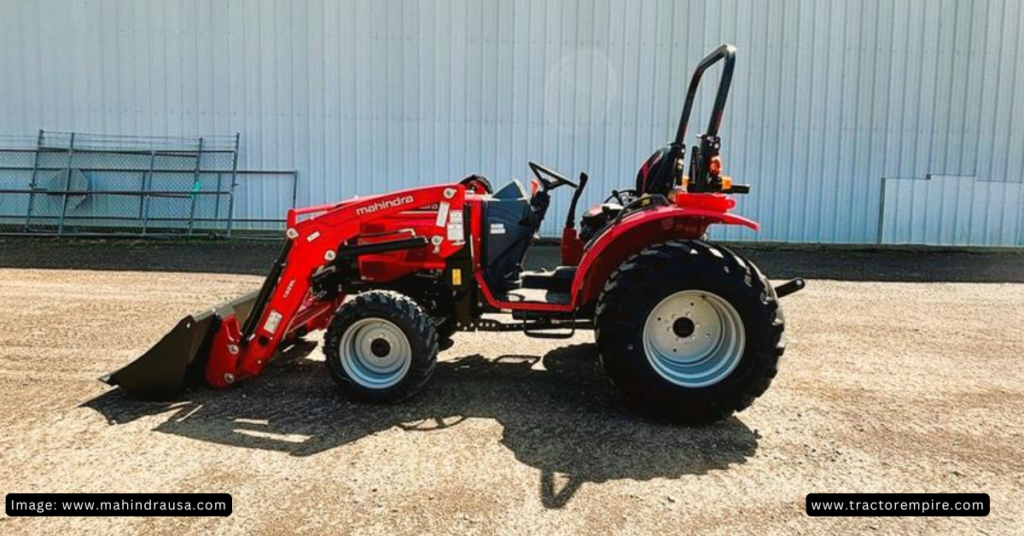
Best Lift-Per-Dollar: Mahindra 1600 Series
Mahindra plays the value game aggressively, and the 1626 is their knockout punch.
Why it’s the smart buy:
- No DPF filter on many models (simpler maintenance)
- Loader lift capacity that embarrasses more expensive competitors
- Industry-leading 7-year powertrain warranty
- Affordable price point
The trade-off: Dealer networks aren’t as dense as Kubota or Deere. If you live 50+ miles from your nearest Mahindra dealer, factor in travel time for service. But these tractors boast solid engineering, and many owners report trouble-free operation for years.
Best for: DIY-minded owners comfortable with basic maintenance who want maximum capability for less money.
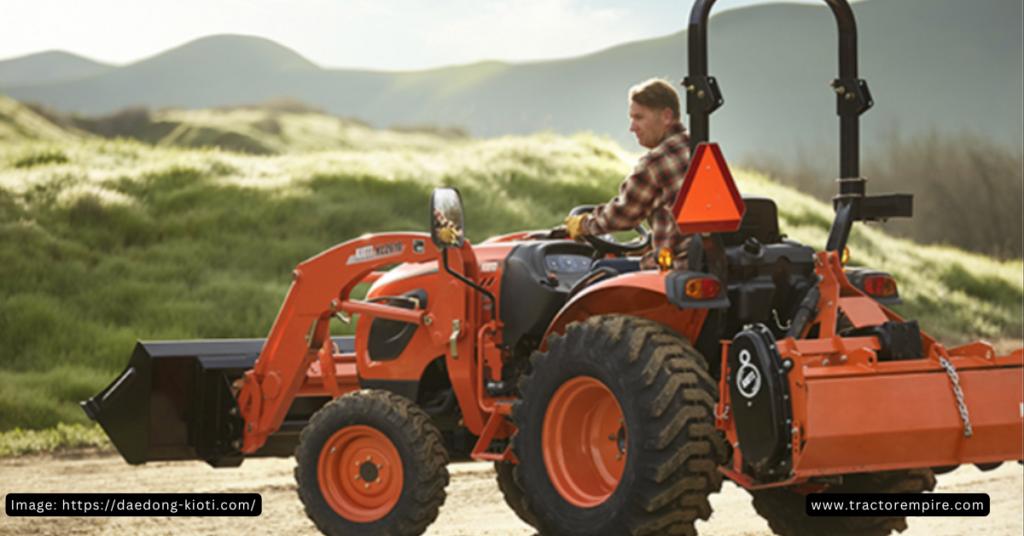
Best “Sleeper” Pick: Kioti CK10 Series
Kioti flies under the radar, but savvy buyers know these South Korean-built tractors often share factory space with premium brands.
The value proposition:
- 15-20% less expensive than Kubota or Deere
- Standard features that others charge extra for (telescoping 3-point links, dual auxiliary hydraulics)
- Solid build quality
- Growing dealer network
The catch: Resale value lags behind orange and green tractors. You’ll take a bigger depreciation hit if you sell in 3-5 years. But if you’re buying to keep, that doesn’t matter.
Who should consider Kioti: First tractor buyers who want modern features without premium pricing, especially those near a good Kioti dealer.
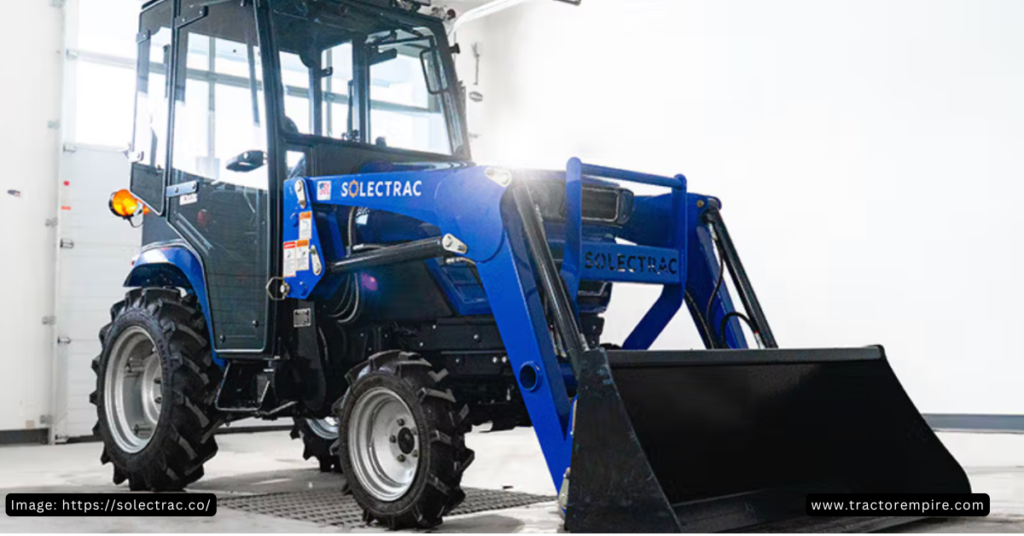
Best Electric Option: Solectrac e25G / Monarch MK-V
Electric tractors have arrived, and they’re no longer science experiments.
The compelling case for electric:
- Instant torque (full power from 0 RPM)
- Zero noise (work at 6 AM without waking neighbors or spooking horses)
- No diesel engine maintenance (oil changes, filters, fuel system issues)
- Solar charging potential cuts operating costs to nearly zero
The realistic limitations:
- Higher upfront cost ($29,000+ vs. $20,000 for diesel equivalents)
- 4-8 hour runtime depending on load
- Charging takes 6-10 hours on standard outlets
- Battery replacement eventually needed (though warranties cover 5-10 years)
Who should buy electric now: Property owners with solar panels, horse farms where noise matters, or anyone doing light-duty tasks (mowing, light loader work) who can charge overnight.
Skip electric if: You’re running a backhoe all day, doing heavy ground engagement, or can’t tolerate mid-day charging breaks.
Persona Matcher: Which Tractor Fits Your Life?
Forget specs for a moment. Let’s match machines to real-world scenarios.
The Horse Property Owner
Lift round bales (800+ lbs), navigate tight spaces between stalls, handle manure with a front end loader
Kubota B Series or Massey Ferguson GC
Tight turning radius matters in confined barn areas. The Kubota L series works, but B series models turn tighter. You need legitimate lift capacity (measured honestly), and both these lines deliver.
The Food Plot Hunter
Ground clearance for rough terrain, PTO power for bush hogging and tilling, ability to pull a heavy drag
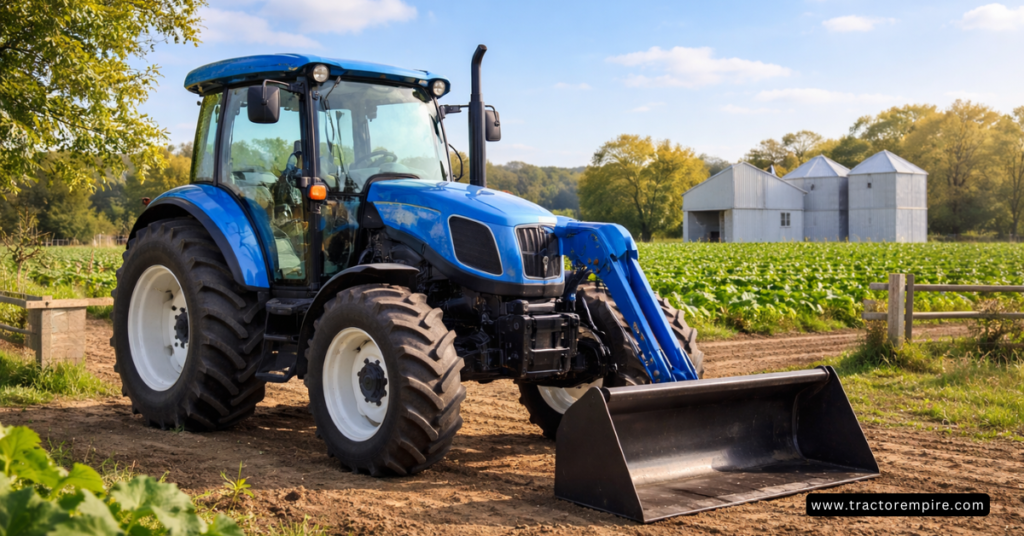
John Deere 3E Series or New Holland Workmaster
Ground-engaging work benefits from gear transmission’s consistent speed. Higher ground clearance handles field edges and rough plots. Strong PTO HP ensures your rotary cutter doesn’t bog down in thick growth.
The Suburban Homesteader (1-3 Acres)
Weekly mowing, occasional mulch/soil transport, driveway grading
John Deere 1 Series (Sub-Compact)
Full-size compact tractors are overkill for small properties and harder to store. Sub-compact models (18-25 HP) handle small jobs beautifully, and that AutoConnect deck makes weekly mowing actually enjoyable. These are essentially the best tractor choice for maintained suburban lots.
The DIY Mechanic
Simple systems you can work on yourself, no proprietary software or dealer-only diagnostics
Branson, TYM, or LS Tractors
These brands use straightforward mechanical diesels without complex emissions systems. Service manuals are available, and you’re not locked into dealer service. LS tractors particularly appeal to shade-tree mechanics who want full control over maintenance.
Financial Deep Dive: The Real Cost of Tractor Ownership
The sticker price is just the beginning. Here’s what ownership actually costs.
The “Hidden” Budget Items
Implements (Budget $5,000-$7,000 immediately):
- Box blade: $400-$800
- Rotary cutter (bush hog): $1,500-$2,500
- Pallet forks: $300-$600
- Post hole digger: $800-$1,500
You’ll need at least a box blade and a rotary cutter from day one. Whatever tractor you get is useless without the right attachments.
Insurance:
- Kubota offers KTAC insurance (Kubota Tractor Acceptance Corporation)
- Homeowner’s policies sometimes cover tractors, sometimes don’t
- Commercial use requires commercial coverage
- Budget $300-$600 annually
Maintenance Supplies:
- 50-hour service kit: $80-$150
- Annual grease, filters, fluids: $200-$300
- Tire repairs/replacements: $800-$1,200 per tire
Resale Value: The Great Equalizer
This is where John Deere and Kubota justify their premium pricing.
5-Year Depreciation Reality:
- John Deere / Kubota: 15-20% depreciation
- Mahindra / Kioti: 25-30% depreciation
- Lesser-known brands: 35-40% depreciation
Example math:
- $25,000 Kubota L2501 → Sells for $20,000-$21,250 after 5 years
- $20,000 Mahindra 1626 → Sells for $14,000-$15,000 after 5 years
The Kubota cost $5,000 more but lost only $4,000 in value. The Mahindra costs less but loses $5,000-$6,000 in value. Over time, the premium brands can actually cost less to own.
Financing: 0% vs. Cash Rebates
Dealers aggressively push 0% financing for 60-84 months right now. Should you take it?
When 0% makes sense:
- You’re comfortable with the monthly payment
- You can invest cash elsewhere, earning 4-5%+
- You plan to keep the tractor for the full loan term
When cash rebates win:
- Dealers offer $1,500-$3,000 instant rebates for cash payment
- You hate debt regardless of the interest rate
- You might upgrade in 2-3 years
Current market reality: With high interest rates on savings and investment accounts, 0% financing is genuinely valuable. Use the dealer’s money for free and keep your cash working for you.
Maintenance & DIY Friendliness
Some tractors invite you to maintain them. Others fight you every step.
The 50-Hour Service: Your First Reality Check
Every tractor needs a comprehensive service around 50 hours. This includes:
- Engine oil and filter change
- Hydraulic filter replacement
- Transmission fluid check
- All grease points serviced
- Air filter inspection
Dealer cost: $300-$500 DIY cost: $80-$150 in parts
Which brands make DIY easy?
- John Deere and Kubota sell complete service kits with every filter and fluid you need
- Clear service manual instructions (usually available online)
- Accessible filter locations
Which brands make DIY hard?
- Some LS and TYM models hide filters in frustrating locations
- Proprietary filter sizes force dealer parts purchases
- Limited service documentation
The #1 Neglected Task: Greasing Zerk Fittings
Every loader, 3-point hitch, and front axle has multiple grease zerks. These need fresh grease every 10-25 hours.
Skip this, and you’ll destroy bushings and bearings worth hundreds in repair costs. A $30 grease gun and 10 minutes per session prevent 90% of premature wear.
Pro tip: Mark all zerk locations with reflective paint on your first service. You’ll find them faster during subsequent sessions.
Hydraulic Fluid: The Overlooked System
Hydraulic systems power your loader, steering, and 3-point hitch. Most compact utility tractor owners ignore hydraulic fluid until something fails.
Check hydraulic fluid every 50 hours:
- Look for milky appearance (water contamination)
- Check for metal particles (internal wear)
- Verify level is within specifications
Hydraulic fluid typically needs changing at 500-1,000 hours, but contamination can demand earlier service.
Should I consider used tractors?
Used Makes Sense If:
Smart savings for budget-conscious buyers
- You find a well-maintained unit from a known owner
- It has under 1,500 hours (tractors can run 3,000-5,000+ hours with care)
- You’re saving 30%+ versus the new price
- Warranty isn’t critical to you
Buy New If:
Maximum peace of mind and modern features
- You want current emissions standards (Tier 4)
- Manufacturer’s warranty provides peace of mind
- 0% financing is available (makes new competitive with used)
- You plan to keep the tractor 10+ years
Conclusion: Your Path Forward
The “safe buy” remains a Kubota L series or John Deere 3 series. You’ll pay more upfront but recoup it in resale value and dealer support. These are the best compact tractors for owners who want minimal risk.
The “smart buy” for value-conscious operators is Kioti or Mahindra. You sacrifice some resale value but get 85-90% of the capability for 20% less money. These brands have matured significantly and deliver solid performance.
The “future buy” is electric if your use case fits. Solectrac and Monarch have proven these aren’t toys—they’re legitimate utility tractors for specific applications.
Whatever tractor you choose, remember this: The best compact tractor is the one that actually gets used. Sit in the seat at your local dealer. Test the pedal layout. Work the loader controls. The machine that feels right ergonomically is the one you’ll enjoy operating for years.
Your next steps:
- Define your primary tasks (mowing vs. loading vs. ground engagement)
- Visit 2-3 dealers representing different brands
- Test drive before buying (every dealer should allow this)
- Budget for implementation immediately
- Plan your maintenance schedule from day one
The compact utility tractor market has never offered better options. Take your time, do your research, and you’ll find the perfect machine for your property and budget.
Now get out there and start turning dirt.
Frequently Asked Questions
Is 25 HP enough for 10 acres?
For mowing: Absolutely. A 25 HP tractor with a 5-6 foot rotary cutter handles 10 acres of pasture mowing comfortably.
For hay production: No. Baling hay requires 35+ HP to run a baler efficiently. You could use a 25 HP tractor for tedding and raking, but not baling.
For general property maintenance: 25 HP is the sweet spot for properties up to 50 acres when you’re doing loader work, grading, and landscaping.
Should I buy a backhoe now or add it later?
Buy it now. Here’s why:
Adding a backhoe after purchase requires installing a sub-frame (the mounting structure). Many dealers won’t retrofit this properly, and it costs 25-35% more than ordering it with the tractor.
Even if you only use a backhoe twice a year for fence posts or drainage, having it available beats renting ($200-$300 per day) or hiring excavation work ($500+ minimum).
Gear vs. Hydrostatic for hills?
For steep slopes: Gear transmission holds speed better going downhill and provides more engine braking.
Safety consideration: HST is actually safer for novice operators on hills. You control direction and speed with one pedal, keeping both hands on the wheel for stability.
Best practice: Whatever transmission type you choose, always operate across slopes (perpendicular to the grade) rather than straight up and down to prevent rollovers.
How important is dealer support?
Critical for: Warranty repairs, complex diagnostics, and parts availability
Less critical if: You’re mechanically inclined and comfortable with DIY maintenance
Real-world impact: A great dealer 30 miles away beats a terrible dealer 5 miles away. Service quality matters more than proximity. Ask local owners about their dealer experiences before buying.