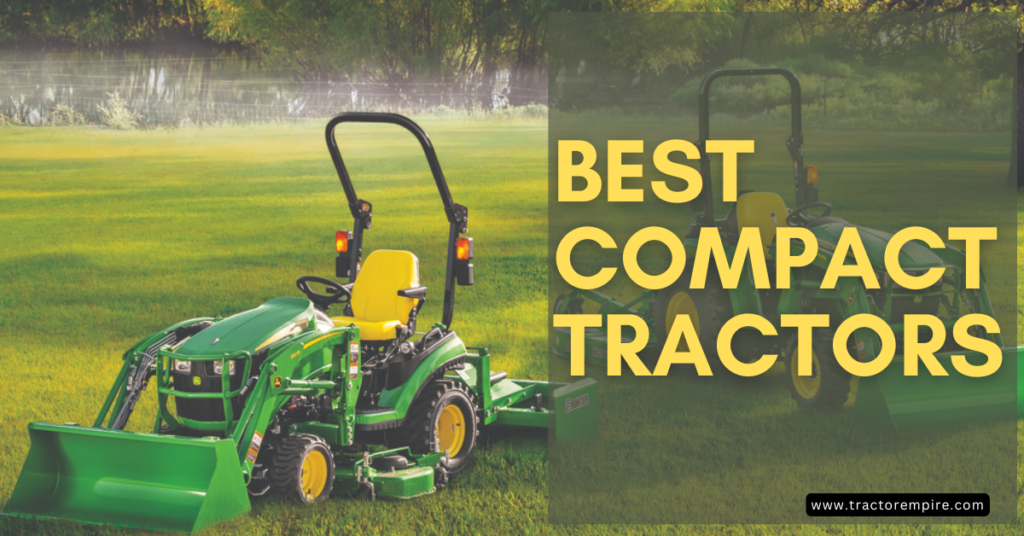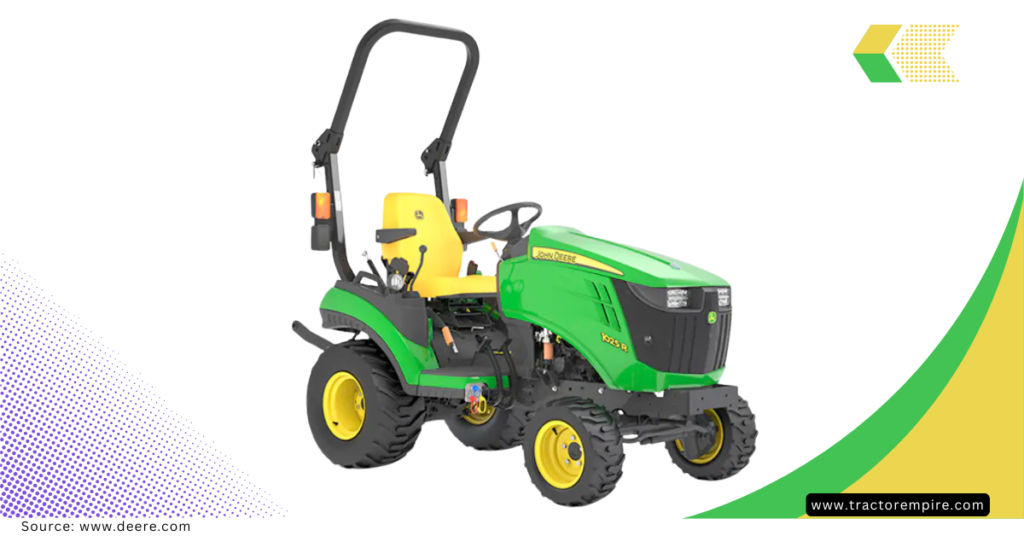
Here’s the reality: the John Deere 1025R is the best-selling sub-compact tractor in North America. I see them everywhere, on hobby farms, at estate properties, and pulling everything from bush hogs to snow blowers across the rural landscape.
But does popularity equal performance in 2025?
After researching owner forums, analyzing spec sheets against competitors, and diving into recall databases, I’ve found the answer is more nuanced than John Deere’s marketing suggests. The 1025R absolutely excels in certain areas, particularly if you’re mowing large properties or doing frequent loader work. However, if you’re primarily digging or need maximum durability, you might actually be better served by the Kubota BX23S.
This John Deere 1025R review cuts through the manufacturer hype to give you the real story. I’ll show you the three mechanical quirks every prospective buyer needs to address, explain why the “killer features” actually matter for your daily workflow, and break down whether this compact utility tractor justifies its premium price tag.
Who is this John Deere tractor for? You’re the ideal 1025R owner if you have 1-5 acres, need more capability than a zero turn mower but less than a full-size farm tractor, and value ease of use over absolute maximum digging force.
Let’s dig in.
Key Takeaways
- Best for: Property owners with 1-5 acres who need versatile mowing, loader work, and light grading
- Biggest strengths: Industry-leading AutoConnect mower deck, strong lift capacity, no DPF/DEF requirements
- Key weaknesses: Higher price point, plastic body panels, 2024 brake recall to address
- Real-world pricing: $23,500-$26,000 with loader (not the $16,000 you’ll see in old articles)
- The verdict: Still the most user-friendly sub-compact utility tractor, but Kubota BX wins for heavy digging
John Deere 1025R Specs That Actually Impact Your Work (Not Just Brochure Numbers)
I’m not going to bore you with every spec, you can find the full specs here or in any manual. Instead, here’s what genuinely affects how this utility tractor performs on your property.
The Yanmar 3-Cylinder Diesel Engine: Why 23.9 HP Is the Magic Number
The 1025R runs a Yanmar-built 23.9 horsepower diesel engine. You might wonder why John Deere chose such a specific number instead of rounding up to 25 HP.
Here’s the brilliant part: by staying under 25 HP, this compact tractor avoids the EPA Tier 4 Final emissions requirements. That means no diesel particulate filter (DPF) and no diesel exhaust fluid (DEF) to maintain.
For you, this translates to:
- Lower maintenance costs
- No regeneration cycles interrupting your work
- Simpler troubleshooting when issues arise
- One less fluid to monitor and refill
If you’ve ever dealt with DPF issues on newer equipment, you’ll immediately understand why this is a huge advantage for a small tractor in this class.
Lift Capacity: The Number on Paper vs. What You Actually Get
John Deere advertises 758 lbs of lift capacity at the pivot pin. Sounds impressive, right?
Here’s what that means in real-world terms: you’ll get approximately 500-550 lbs of actual material in the bucket when you account for the bucket’s own weight and the distance from the pivot point.
Is that good? Absolutely. The 1025R tractor beats the comparable Kubota BX23S by roughly 100 lbs, which matters when you’re moving gravel, loading compost, or handling landscaping materials. However, don’t expect to lift a round bale—that’s both too heavy and dangerously unstable on a sub-compact like this.
Hydraulic Flow: Fast Enough for Most Tasks (With One Caveat)
The hydraulics deliver 6.3 gallons per minute (GPM). This flow rate handles a front loader excellently and runs most standard implements without issue.
The limitation? If you’re trying to operate a grapple and lift simultaneously, you’ll notice things slow down. The system prioritizes one hydraulic function at a time, which is typical for compact utility tractors in this price range. Just manage your expectations if you’re coming from larger equipment.
| Related: John Deere 1025R Specs, Features, Attachments & Buying Guide
The Three “Killer Features” That Make People Choose Green
John Deere markets several innovations on the 1025R, but three genuinely change your daily experience with the tractor. These aren’t just marketing fluff—they’re the reasons owners consistently praise this machine.
1. Twin Touch Foot Pedals: Why Your Ankles Will Thank You
Instead of the single rocker-style treadle pedal found on the Kubota BX series, the John Deere 1025R uses side-by-side forward and reverse foot pedals.
Why does this matter? After a full day of mowing or loader work, you’ll feel the difference. The Twin Touch system requires less ankle rotation and feels more intuitive—push the right pedal to go forward, push the left to reverse. No rocking motion that fatigues your ankle joint over time.
Is this a dealbreaker? No. But if you’re spending 4-6 hours on the tractor regularly, comfort features like this accumulate into real quality-of-life improvements.
2. AutoConnect Drive-Over Mower Deck: The Party Trick That Actually Saves Time
This is the feature that makes people pull out their phones to record videos. The AutoConnect mid-mount mower system lets you literally drive over the 54-inch or 60-inch mower deck to attach it—no crawling underneath, no manual pin connections.
Here’s the comparison: detaching and reattaching a traditional slide-under deck on competing tractors takes 10-15 minutes and requires you to get on the ground. With AutoConnect, you’re talking 60-90 seconds total.
If you’re frequently switching between mowing and using your front loader or other implements, this time savings compounds quickly. Over a mowing season, you’ll save hours of setup time and eliminate the frustration of alignment issues.
3. Quik-Park Loader System: Disconnect Without Leaving Your Seat
Similarly, the Quik-Park front loader system allows you to detach the entire loader assembly in under 60 seconds without climbing off the tractor.
This matters most if you regularly need the tractor without the loader—whether for tilling, running a front blade for snow removal, or simply needing better visibility for finish mowing. The convenience factor here is substantial, though I’ll note that many owners leave the loader attached permanently since it’s so useful.
John Deere 1025R vs. Kubota BX23S: The Head-to-Head Tractor Comparison
Let’s address the elephant in the room: the Kubota BX series represents the 1025R’s fiercest competition among compact utility tractors. Here’s how they actually stack up in real-world use.
John Deere 1025R vs. Kubota BX23S
| Feature |
|
|
|---|---|---|
|
Lift Capacity (Loader)
|
~550 lbs (realistic working capacity) +100 lbs advantage | ~450 lbs (realistic working capacity) |
|
Foot Pedal Design
|
Twin Touch (side-by-side pedals) Less ankle fatigue | Treadle pedal (rocker style) |
|
Engine Character
|
Higher RPM operation, more responsive throttle | Smoother idle, quieter overall operation Quieter & smoother |
|
Hood Construction
|
Composite/plastic body panels | Metal construction throughout More durable |
|
Mower Attachment
|
AutoConnect drive-over system (60 seconds) 10x faster | Manual slide-under (10-15 minutes) |
|
Backhoe Performance
|
Good for light excavation work | Superior dig depth & control precision Best for digging |
|
Overall Durability
|
Good build quality (watch for recalls) | Excellent reputation for longevity Built tougher |
When to Choose the John Deere 1025R
Buy this tractor if:
- Mowing is your primary task and you’ll frequently switch between the mower deck and loader
- You prioritize lift capacity for material handling and landscaping work
- You value ease of attachment changes and user-friendly operation
- You prefer the dealer network and financing options John Deere offers
When to Choose the Kubota BX Instead
Consider the Kubota if:
- Digging and excavation work dominate your implement usage
- You want the most durable construction with metal body panels
- A smoother, quieter engine matters more than quick-attach convenience
- You need the best backhoe performance in the sub-compact class
Both are excellent compact tractors. Your decision should align with how you’ll actually use the equipment, not which brand your neighbor bought.
The Dark Side: Critical Issues Every 1025R Buyer Must Know
This section provides value you won’t find in most John Deere tractor reviews. These are real mechanical issues affecting 2018-2024 models that can cost you thousands if you’re not aware.
Issue #1: The Air Filter Bracket Valve Cover Crack (Pre-2018 Critical Failure)
The Problem: On earlier 1025R models (primarily pre-2018, but some later units), the air filter bracket vibrates against the valve cover. Over time, this vibration cracks the valve cover, allowing unfiltered air directly into the engine—essentially dusting your motor with fine particles that cause premature wear.
The Fix: John Deere released a retrofit kit that relocates the air filter bracket to the firewall, eliminating the vibration issue.
Your Action: If buying a used 1025R, verify this retrofit has been completed. Ask the seller for documentation or have your dealer inspect before purchase. This is non-negotiable—an uncorrected valve cover crack can lead to catastrophic engine damage.
Issue #2: The Front Bell Crank Brake Recall (November 2024)
The Problem: In late 2024, John Deere issued a significant recall affecting 2017-2024 model year 1025R tractors. The front brake linkage (bell crank) can stress-fracture, resulting in complete brake failure. This is obviously a serious safety concern, particularly on slopes.
The Fix: Authorized John Deere dealers will inspect and replace the affected components at no charge.
Your Action: Before buying any used 1025R, check the VIN against John Deere’s recall database. If buying new, confirm the dealer has addressed this recall before delivery. Don’t skip this step—brake failure on a 2,000+ lb tractor creates genuine danger.
Issue #3: Transmission and PTO Seal Leaks
The Problem: Owners report occasional weeping from the PTO seal and front hydrostatic transmission cover. While not catastrophic, these leaks can progress and create mess under the tractor.
The Fix: Most dealers address this under warranty if caught early. Post-warranty, replacement seals run $100-300 plus labor.
Your Action: During pre-purchase inspection of used units, look for oil residue around the PTO shaft and front transmission housing. Minor seepage isn’t a dealbreaker, but active dripping suggests deferred maintenance.
What You’ll Actually Pay for a John Deere 1025R in 2025 (Real Numbers)
Forget the $16,000 “tractor only” MSRP you’ll see in outdated articles. That’s not how these compact utility tractors are sold in the real world.
Realistic Pricing Breakdown
Tractor with Front Loader (120R)
$23,500 – $26,000
- This is the minimum configuration most people buy
- Includes the Quik-Park loader system
- Regional pricing variation based on dealer markup and local demand
TLB Package (Tractor, Loader, Backhoe)
$29,000 – $32,000
- Adds the 260 backhoe attachment
- Best value if you know you need digging capability
- Still cheaper than buying backhoe separately later
Essential Add-Ons
The Financing Reality Check
John Deere frequently offers 0% financing for 60 or 84 months, which sounds fantastic. Here’s what they don’t advertise prominently: cash discounts typically disappear when you take the 0% rate.
Do the math on your situation. If your dealer offers a $1,500 cash discount, you might actually save money paying cash or using outside financing at 4-6% rather than taking the 0% dealer financing.
Maintenance Schedule Simplified: What Actually Matters
The owner’s manual contains confusing charts that sometimes contradict dealer recommendations. Here’s the straightforward maintenance schedule based on what experienced owners actually do.
The Critical 50-Hour Break-In Service
What to do:
- Change hydrostatic transmission fluid
- Clean the transmission suction screen (prevents long-term damage)
- First engine oil change
Why it matters: This service removes metal particles from initial break-in wear. Some owner’s manuals downplay this service, but nearly every dealer recommends it. Skipping this can reduce your transmission’s lifespan significantly.
Cost: $200-$350 at the dealer, or $75-$100 DIY if you’re comfortable with it.
The 200-Hour Service
What to do:
- Engine oil and filter change
- Air filter inspection and cleaning
- Grease all fittings
- Check hydraulic fluid level
Cost: $150-$250 at dealer, $50-$75 DIY.
The 400-Hour Service (or Annual, Whichever Comes First)
What to do:
- Complete transmission fluid flush
- Fuel filter replacement
- Thorough inspection of all hoses and connections
- Engine oil change
Cost: $300-$450 at dealer, $125-$175 DIY.
Pro tip: Most hobby farm owners hit the annual mark before the hour mark. If you’re only running 50-75 hours per year, use the calendar intervals instead.
Five Must-Have Upgrades for Your New 1025R Tractor
Don’t make the mistake of thinking your new tractor is ready to work hard right off the dealer’s lot. These five additions transform the 1025R from capable to excellent.
1. Ballast Box (Non-Negotiable for Loader Work)
Why you need it: The 1025R will tip forward during aggressive loader work without rear weight. This isn’t just inconvenient—it’s dangerous.
What to get: A 300-400 lb ballast box that mounts to the three-point hitch. Many owners add concrete blocks or weights.
Cost: $400-$600 for the box; fill materials vary.
2. RimGuard or Beet Juice in Rear Tires
Why you need it: Liquid ballast in your rear tires adds 75-100 lbs per tire, dramatically improving stability on slopes and traction in mud or snow.
What to get: Beet juice (RimGuard) is non-toxic and won’t corrode rims like calcium chloride.
Cost: $300-$400 installed by dealer or tire shop.
3. Bolt-On Bucket Hooks
Why you need it: Inexplicably, John Deere buckets don’t include grab hooks for chains or straps. You’ll want these for dragging logs, pulling T-posts, or securing loads.
What to get: Ken’s Bolt-On Hooks or similar aftermarket options.
Cost: $75-$125.
4. Rear Wheel Spacers
Why you need it: Widening your rear wheel base by 4-6 inches significantly improves stability on side slopes and reduces tip-over risk.
What to get: John Deere OEM spacers or quality aftermarket options designed for the 1025R.
Cost: $200-$300 for the pair.
5. Piranha Tooth Bar for the Bucket
Why you need it: If you’re working with hard-packed clay, compacted gravel, or need to break through roots, the standard bucket edge won’t cut it (literally).
What to get: A bolt-on tooth bar that adds aggressive teeth to your bucket edge.
Cost: $200-$350 depending on bucket width.
The Bottom Line: Should You Buy the John Deere 1025R in 2025?
After analyzing specs, owner experiences, and competitive options, here’s my honest assessment.
The John Deere 1025R remains the most user-friendly sub-compact utility tractor on the market. The AutoConnect mower deck, Twin Touch pedals, and Quik-Park loader system genuinely simplify ownership for people who aren’t career farmers. If you’re a weekend warrior managing a rural property, these convenience features translate into more time enjoying your land and less time wrestling with implements.
However, this compact tractor isn’t perfect. The premium price demands you use those convenience features regularly to justify the cost. The plastic body panels won’t age as gracefully as metal construction. And if heavy excavation work dominates your implement schedule, the Kubota BX23S delivers superior backhoe performance.
Buy the 1025R If:
- Mowing large areas is your primary task
- You’ll frequently change between the mower deck, loader, and other implements
- You value ease of use and quick attachment systems
- You have 1-5 acres needing versatile capability
Look Elsewhere If:
- Digging and trenching will be your main work (consider Kubota BX)
- You’re on a tight budget (explore used compact tractors or entry-level models like the 1023E)
- You need maximum durability for commercial or heavy-duty farm use (step up to the 2-series or competitor commercial models)
My final recommendation: The 1025R is the right choice for the “estate owner” who needs serious capability wrapped in approachable operation. Just make sure you address the brake recall, verify the air filter bracket retrofit on used models, and budget properly for essential upgrades like ballast and wheel spacers.
Want to see if this tractor fits your specific property needs? Visit your local John Deere dealer for a demonstration. Test the AutoConnect mower system yourself—experiencing that convenience firsthand will tell you everything you need to know about whether this premium compact utility tractor justifies its price for your situation.
Frequently Asked Questions
Can the 1025R lift a round bale?
No. A standard round bale weighs 800-1,200 lbs, which exceeds the safe lift capacity of this sub-compact. Even if you could technically lift it, the weight distribution makes it extremely unstable and dangerous. Use a properly-sized tractor with a spear attachment for round bale handling.
Is the 1025R good for snow removal?
Yes, with the right attachment. The 1025R works well with a front blade or snow blower for driveways and paths. Many owners add a Curtis or similar cab for winter comfort. Just ensure you have rear ballast and possibly tire chains for traction on ice.
Does the 1025R have a DPF filter or require DEF fluid?
No. Because the engine stays under 25 HP (23.9 HP specifically), it avoids Tier 4 Final emissions equipment. This means no DPF regeneration cycles and no DEF tank to fill and maintain—a significant maintenance advantage.
What’s the difference between the 1023E and the 1025R?
The 1023E is the economy version with a slightly smaller engine (22.4 HP vs. 23.9 HP), lacks the AutoConnect mower deck system, and has fewer standard features. The 1025R is worth the upcharge for most users due to the convenience features and better resale value.
Is the Mauser cab worth the $8,000+ investment?
It depends entirely on your use case. If you’re snow blowing or working in harsh weather regularly, a cab with heat provides real value. However, for woods work or tight spaces, the added height (increases ROPS clearance to around 8 feet) becomes a liability around low-hanging branches.
How does the 1025R compare to a larger 2032R?
The 2032R offers more power (31.3 HP) and lift capacity, but loses the AutoConnect mower system and costs significantly more ($30,000+ base). For most property owners under 10 acres, the 1025R provides better value and easier maneuverability in tight spaces.