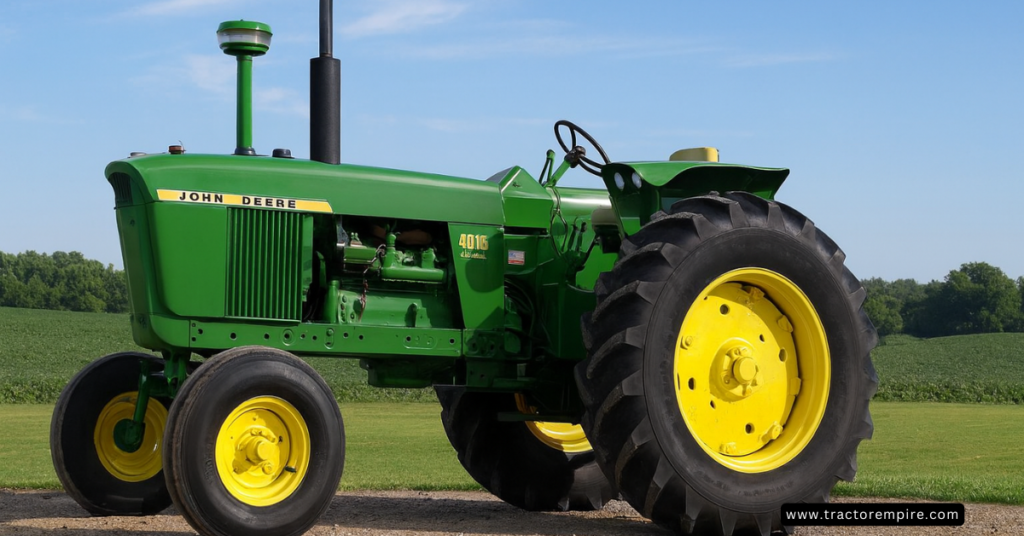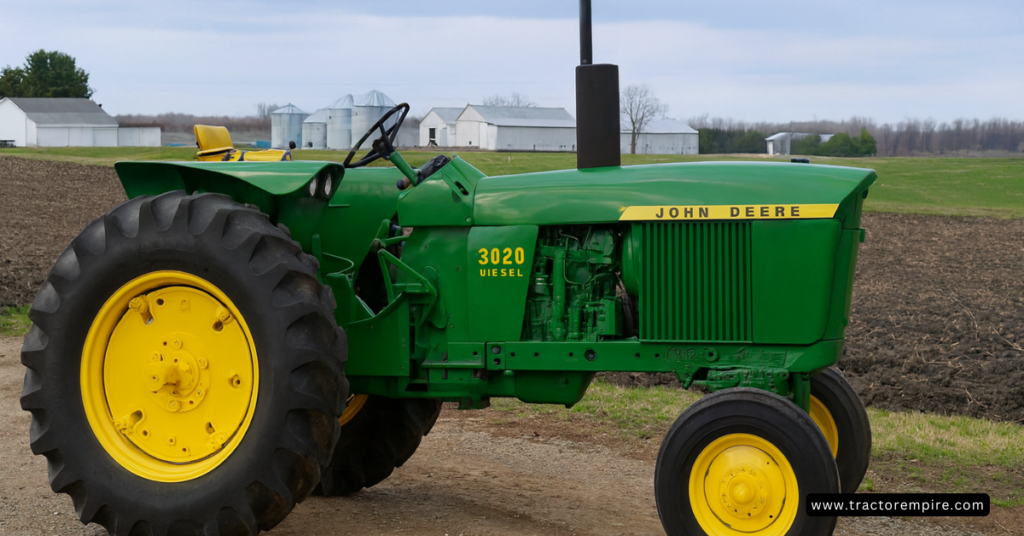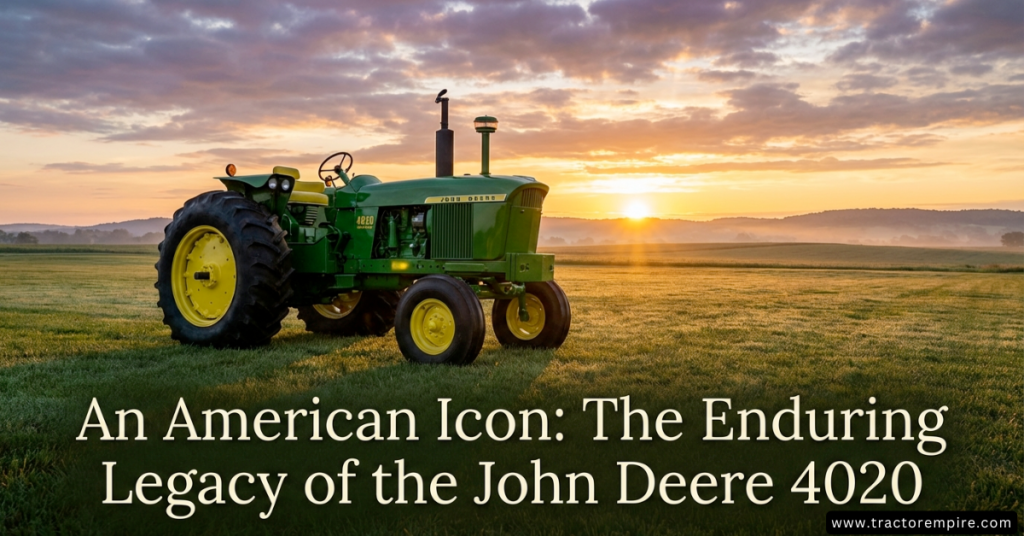
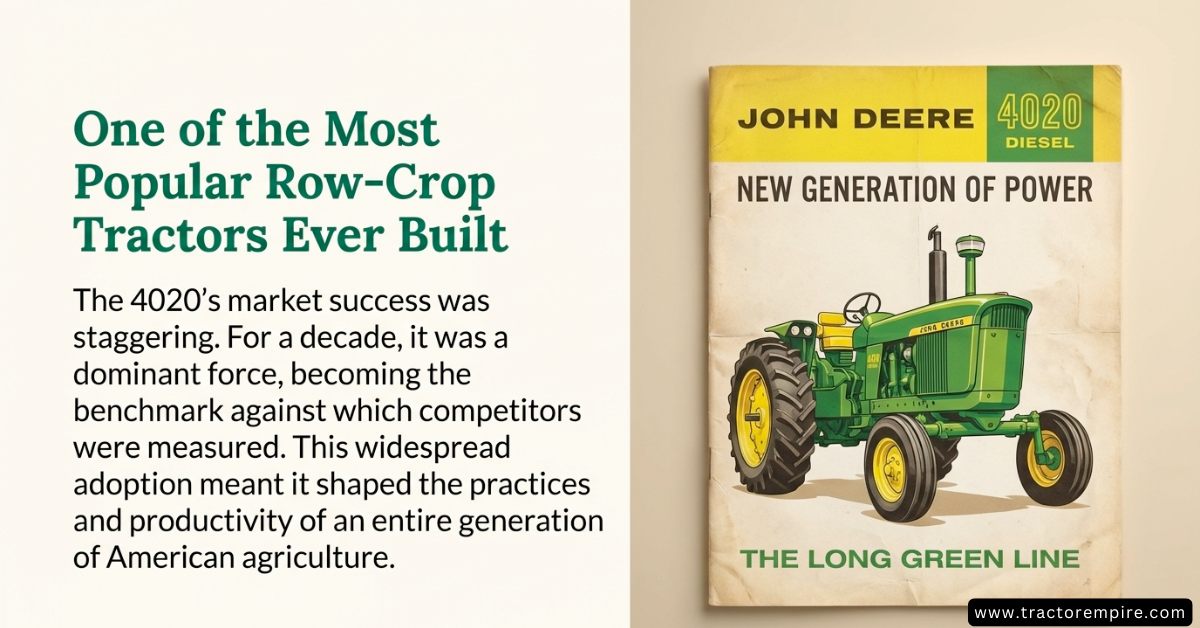
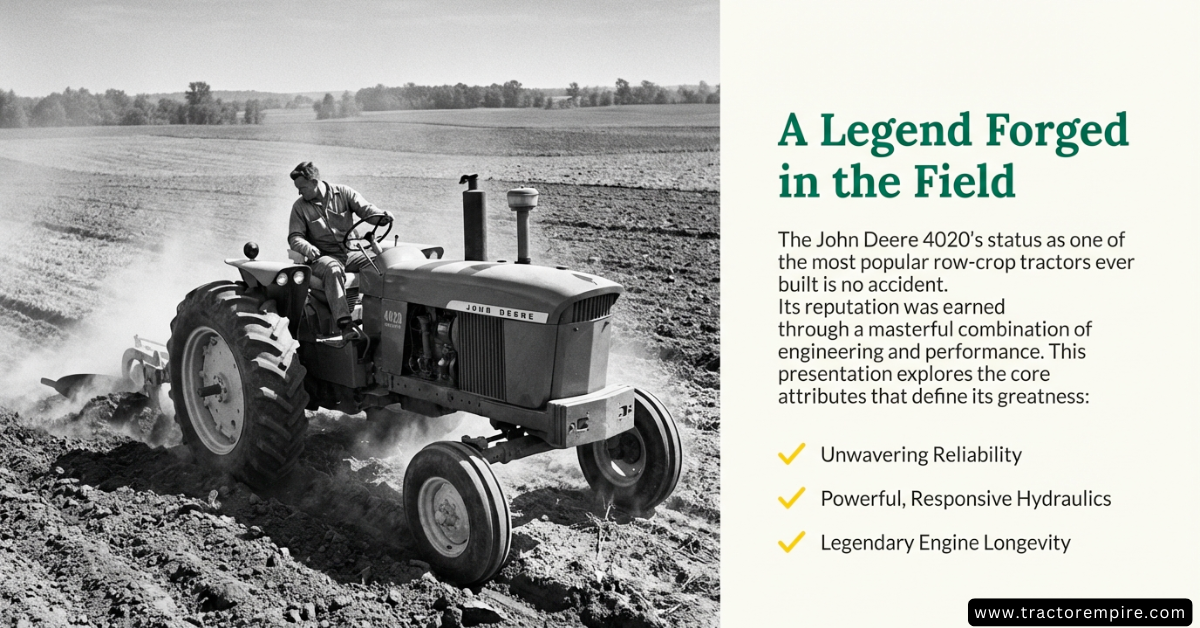
The John Deere 4020 is one of the most iconic row-crop tractors ever built, known for its reliability, power, and versatility. Introduced in the 1960s, it set new standards for tractor specifications and PTO horsepower in its class. With strong hydraulic performance and multiple transmission options, the 4020 excels at hay work, loader work, and moderate tillage.
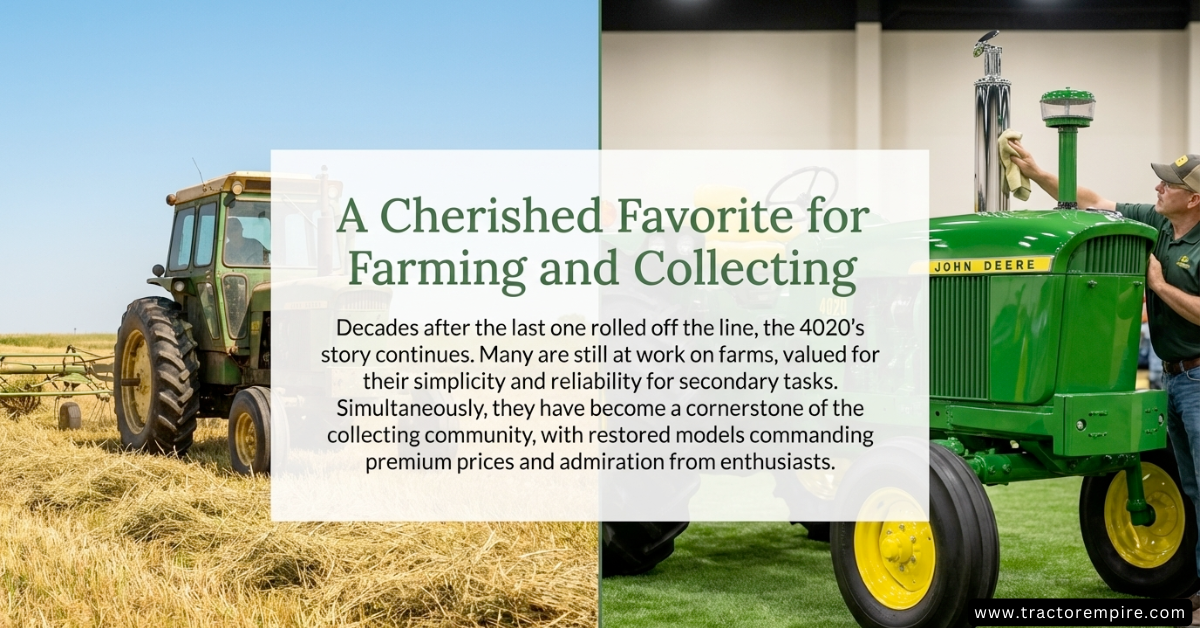
Farmers valued its smooth power delivery and operator-friendly design, which helped make it a bestseller in its era. Even today, the John Deere 4020 remains highly sought after for both working farms and collectors.
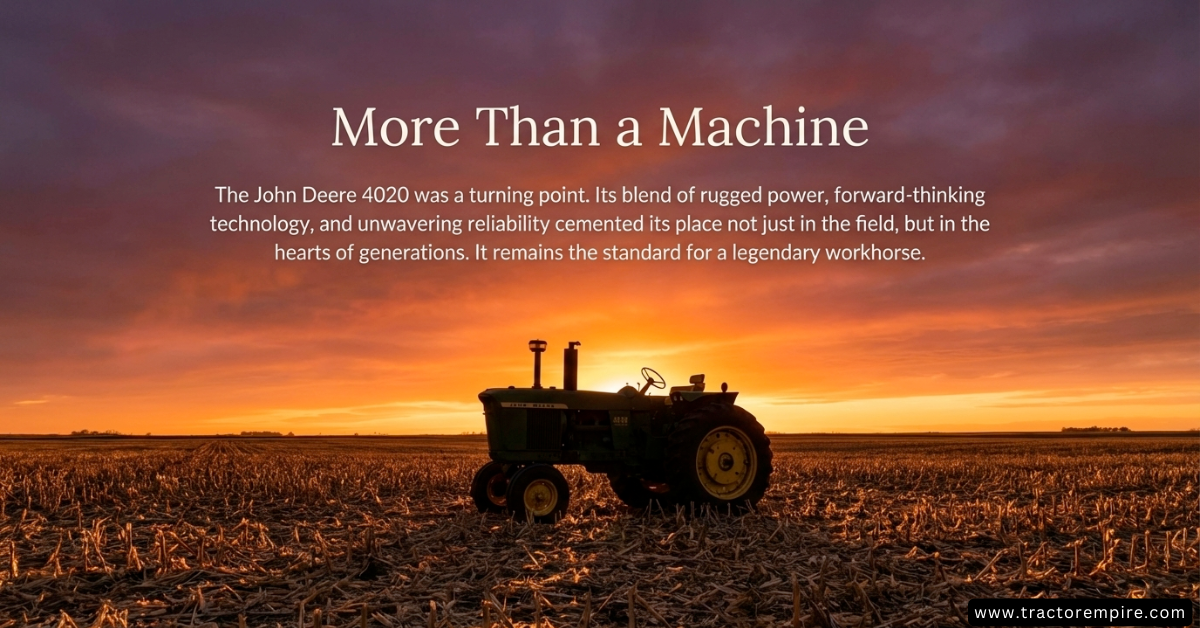
General Overview
The John Deere 4020 row-crop tractor is one of the most recognized tractor specifications of the “New Generation” era. With ~95 PTO horsepower and a mid-size chassis, it is widely used for loader work, hay work, light-to-medium tillage, mowing, and general chores on mixed crop, cattle, and large hobby farms.
Engine, Power & Performance
These John Deere 4020 specs deliver strong torque rise and dependable PTO power for hay tools, larger rotary mowers, and medium tillage implements. Owners value the engine for easy starting, smooth operation, and efficient fuel use in day-to-day loader work and field jobs.
Transmission, PTO & Hydraulics
The 4020’s independent PTO and closed-center hydraulics give quick loader response and smooth control of hay balers, mowers, and hydraulic implements. Syncro-Range is simple and durable, while Power Shift models are highly sought after for baling, forage work, and frequent directional changes in loader work.
Dimensions, Weight & Tires
In size, the John Deere 4020 sits in the mid-size row-crop class: large enough to handle 4–5 bottom plows and big balers, yet compact enough for loader work in yards and feeding areas. Adjustable tread settings and ballast allow you to tune stability for hillsides and heavy 3-point implements.
Electrical System & Attachments
Typical compatible attachments:
- Front-end loaders for manure, bale, and pallet work
- Rotary cutters and batwing mowers for pasture mowing
- Disc mowers, rakes, and balers for hay work
- Chisel plows, field cultivators, and light primary tillage tools
- Blades, snow blowers, spreaders, augers, and grain handling tools
With strong PTO power and closed-center hydraulics, the John Deere 4020 handles a wide range of modern 3-point and drawn implements, making it a flexible platform for loader work, hay work, and chore duty.
Price, Value & Resale
Strong demand, huge parts support, and legendary reliability give the John Deere 4020 excellent resale value. Buyers often compare tractor specifications such as PTO horsepower, transmission type, and hydraulic condition when deciding between 4020s and similar row-crop tractors.
Maintenance, Fluids & Service
The 4020 is known for being straightforward to service with basic tools. Regular fluid and filter changes, periodic hydraulic screen cleaning, and attention to brakes, steering, and PTO clutches keep horsepower, PTO power, and hydraulic performance strong for decades of work.
Common Issues & Parts Compatibility
Most 4020 issues are age-related: original 24-volt systems, tired hydraulic pumps, worn brakes, and steering components. Many owners convert to a simpler 12-volt alternator system. Parts availability is excellent, and components interchange with related models like the 4010, 4000, and 4320, making long-term ownership practical.
Tractor Tests & Real-World Use
Nebraska test results confirm that the John Deere 4020 tractor specifications deliver strong drawbar and PTO performance for its weight class. In the field, it is a proven match for 4–5 bottom plows, forage harvesters, large round balers, and heavy rotary mowers. It’s an ideal fit for row-crop farms, cattle and hay operations, and serious hobby farms needing reliable ~100 HP with strong PTO and loader capability.
Frequently Asked Questions
What makes the John Deere 4020 so popular among farmers today?
The 4020 earned its reputation through reliable PTO horsepower, durable transmissions, strong closed-center hydraulics, and excellent parts support. It’s still widely used for loader work, hay production, light tillage, mowing, and general chores.
Add image
What engine options were available on the John Deere 4020?
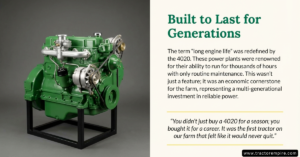
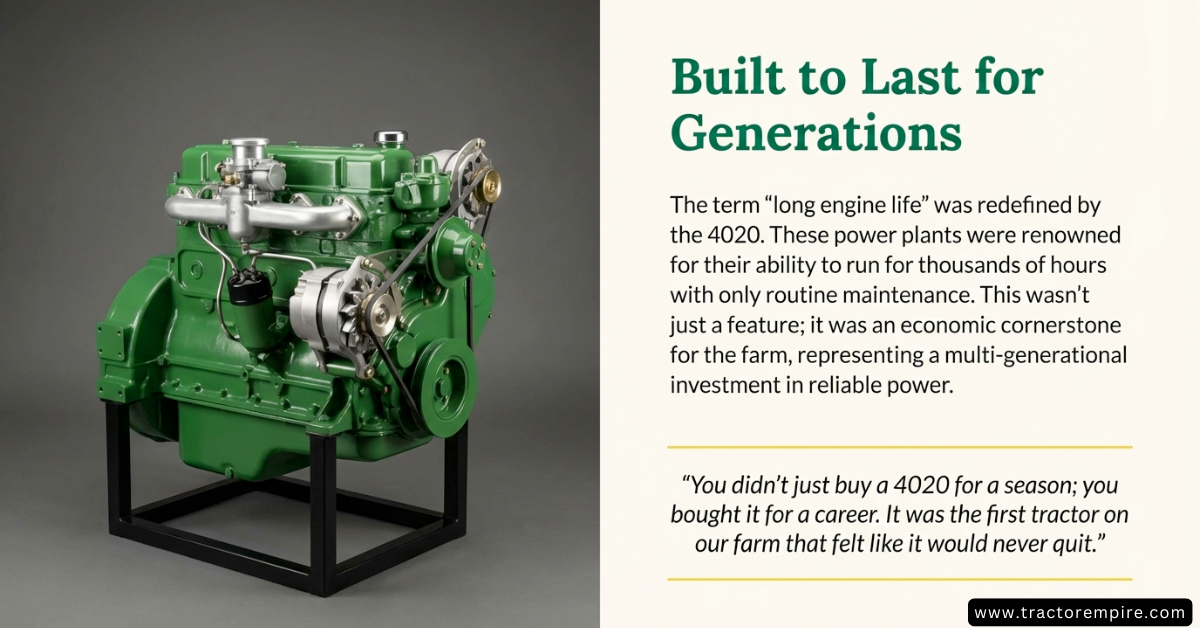
Most 4020 tractors were equipped with a 6.6L 6-cylinder diesel engine. Gasoline and LP-gas (LPG) versions were also offered, though diesel models are much more common and desirable on the resale market due to better torque and fuel efficiency.
What is the shift pattern on a John Deere 4020 Syncro-Range transmission?
The 8-speed Syncro-Range gearbox on the 4020 uses a range lever (left) combined with an “H” shift pattern (right). The gears available in each range work like this:
1–3–R1 (Low Range): When in Low range (left lever), you can shift between 1st, 3rd, and 1st Reverse (R1).
2–5–R2 (High Range): In the next range, you shift between 2nd, 5th, and 2nd Reverse (R2).
4–7 (“Road Range”): Another position allows 4th and 7th gears, often used for faster field travel.
6–8 (High Transport Range): A final position gives 6th and 8th, typically for transport or road speeds.
Note: Some shifts require the tractor to stop (partial synchronization), especially between ranges. Power Shift models do not require clutching between gears.
How much PTO horsepower does a John Deere 4020 produce?
Most Diesel 4020 tractors test around 95–96 PTO horsepower, with drawbar power typically around 80–84 HP, depending on configuration and test fuel conditions.
What types of implements can a John Deere 4020 handle?
The 4020 can run large rotary mowers, round balers, mower-conditioners, augers, loaders, chisel plows, field cultivators, planters, and spreaders. Its closed-center hydraulic system works particularly well for loaders and hydraulic-driven tools.
Is the John Deere 4020 hard to maintain?
No. It is considered very service-friendly, especially with widely available aftermarket and OEM parts. Basic tools cover most repairs. Common maintenance areas include hydraulic screens, brake wear, and electrical upgrades on early 24-volt versions.