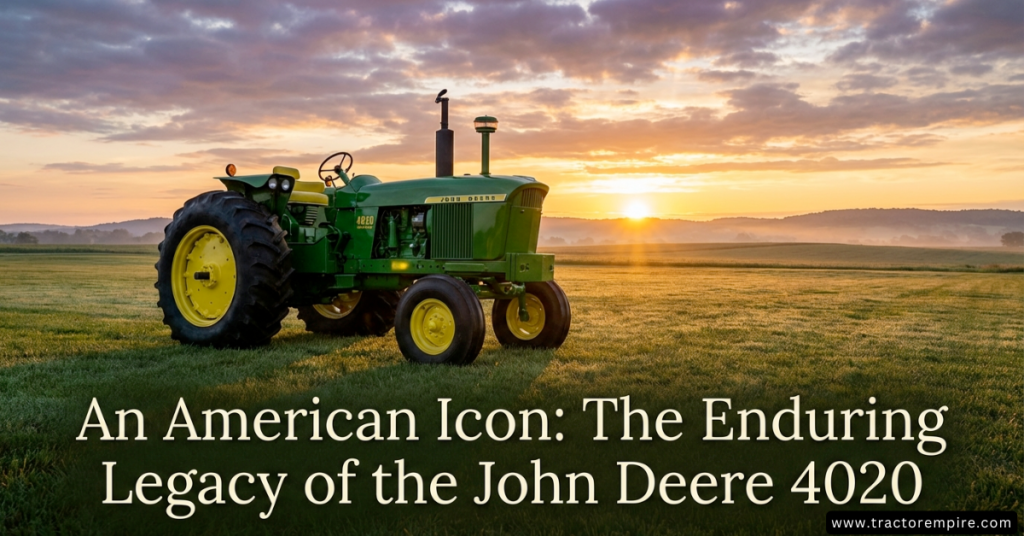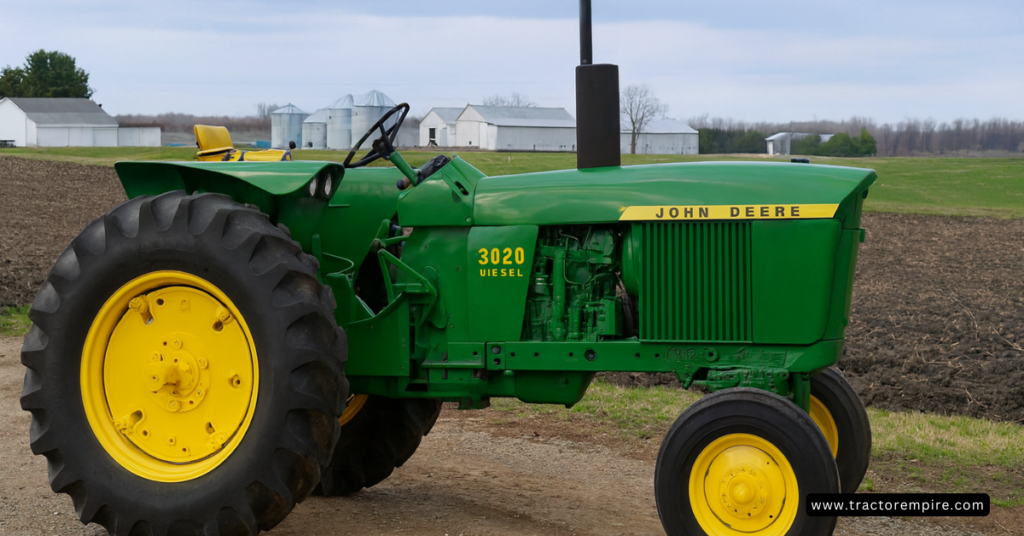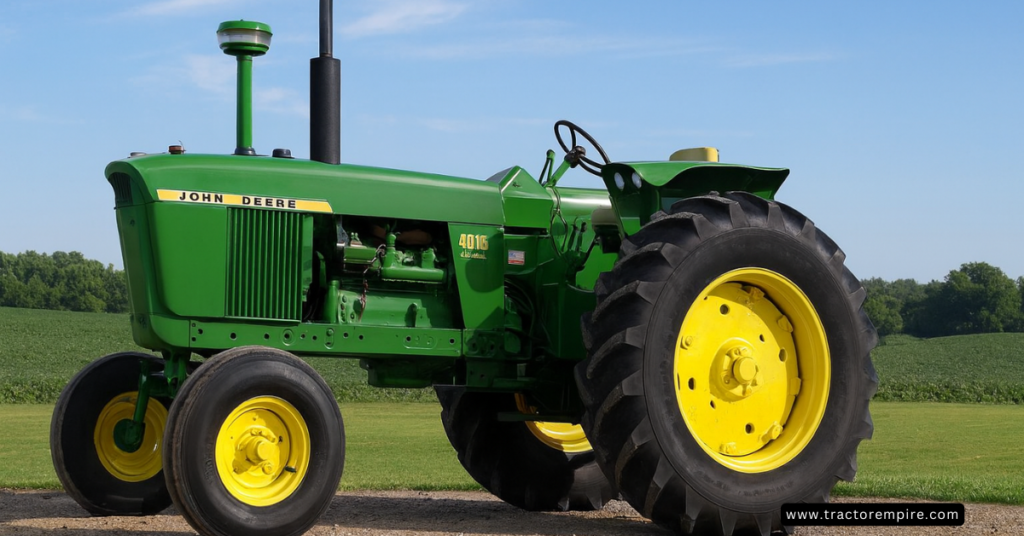
The John Deere 4010 marked the beginning of Deere’s New Generation era, bringing modern power and engineering to mid-size farms. With over 80 PTO horsepower, advanced hydraulics, and a smooth 6-cylinder engine, it quickly became a favorite for hay work, tillage, and heavy chores.
This guide covers its full tractor specifications, real-world performance, and ownership insights.
General Overview
The John Deere 4010 was the flagship row-crop tractor of Deere’s New Generation, bringing modern 6-cylinder power, advanced hydraulics, and more comfortable controls to mid-size farms. With around 80+ PTO horsepower, its tractor specifications made it a strong fit for hay work, loader work, tillage, planting, and heavy mowing on medium to large acreages.
Engine, Power & Performance
The 4010’s smooth 6-cylinder engine delivers strong torque and reliable PTO horsepower for heavy field work. Diesel models are especially efficient for plowing, baling, and tillage, while gas and LP versions appeal to collectors and lighter-duty farms. In real-world use, it behaves like a solid 80-plus hp tractor that can run large mowers, hay tools, and medium primary tillage without feeling overmatched.
Transmission, PTO & Hydraulics
The Syncro-Range gearbox gives the 4010 a useful spread of field and road speeds, with on-the-move shifts inside each range once a station is selected. Closed-center hydraulics with healthy flow make it very capable for loader work, hydraulic hay tools, and modern remotes, while the independent PTO and Category II hitch support a wide mix of tillage and hay implements.
Dimensions, Weight & Tires
In the field the 4010 feels like a substantial but still maneuverable row-crop tractor. The long wheelbase and relatively low operating weight give a good balance of stability and ride quality, especially with proper ballast and duals for heavy tillage or large hay equipment.
Electrical System & Attachments
The original split 24-volt system cranks the big diesel confidently but is quirky to service, which is why many working tractors have been converted to a straight 12-volt setup. With good wiring and lighting, the 4010 is comfortable handling loader work, snow duty, and hay work well into the evening.
- Front-end loaders for loader work and feeding
- Pull-type and mounted moldboard plows for tillage
- Disc harrows and field cultivators
- Mower-conditioners and rotary mowers for hay work
- Square and round balers
- Grain drills, planters, and fertilizer spreaders
- Snow blades, augers, and grain-handling equipment
Thanks to its PTO horsepower, closed-center hydraulics, and Category II hitch, the 4010 remains a very versatile platform for both vintage implements and many modern 3-point tools.
Price, Value & Resale
As the tractor that launched Deere’s modern row-crop line, the 4010 holds strong historical and collector appeal. Clean diesel examples with good rubber and straight sheet metal bring a premium, while gas and LP tractors tend to be more affordable working machines. Overall, it has a reputation for solid resale value in the classic horsepower class.
Maintenance, Fluids & Service
Routine service on a 4010 is straightforward: keep clean oil, quality filters, and fresh coolant in it, and watch hydraulic hoses and steering lines for age-related leaks. Many owners also pay close attention to the PTO coupler, brake adjustments, and the unique 24-volt wiring. When maintained properly, these tractors are known to rack up thousands of hours as dependable hay and loader workhorses.
Common Issues & Parts Compatibility
Common ownership issues include tired wiring in the 24-volt system, hydraulic seepage, worn shift linkages, and PTO speed-change components that have seen many seasons of heavy PTO horsepower use. The upside is strong aftermarket and OEM parts support, and many components interchange with other New Generation tractors, making the 4010 relatively easy to keep in service for modern loader work, hay work, and tillage.
Tractor Tests & Real-World Use
Nebraska testing confirmed that the John Deere 4010 delivered more PTO horsepower than its original rating, putting it at the top of its horsepower class among two-wheel-drive row-crop tractors of the early 1960s. In practice it’s well suited to 4–5 bottom plows, substantial tillage tools, and serious hay work, making it a great fit for mid-size row-crop farms, cattle and hay operations, and acreage owners who want classic iron with genuinely useful tractor specifications.
Frequently Asked Questions
How much engine oil does a John Deere 4010 hold?
The John Deere 4010 holds approximately 8 quarts (2 gallons) of engine oil when changing both the oil and filter. Using a high-detergent diesel-rated oil is recommended for best performance and longevity.
How much horsepower does the John Deere 4010 actually produce?
Although originally rated at 80 PTO horsepower, Nebraska tests confirmed the diesel version produced about 84 PTO hp and nearly 72 drawbar hp, putting it among the strongest tractors in its class at the time.
What jobs is a John Deere 4010 best suited for?
The 4010 is ideal for hay work, loader work, tillage, baling, mowing, and general farm chores. Its closed-center hydraulics and strong PTO power make it highly versatile for a wide range of implements.
What are common issues to watch for on a John Deere 4010?
Typical concerns include hydraulic leaks, weak or aging 24-volt electrical wiring, worn shift linkages, and PTO coupler wear. Many tractors have been converted to a 12-volt system for easier maintenance.
Is the John Deere 4010 a good collectible or working tractor today?
Yes, diesel models in particular are highly valued by collectors and still capable as field tractors. With plentiful parts support and strong resale demand, the 4010 remains both a reliable workhorse and a desirable vintage machine.